Felicia Ikpum kissed her only child goodbye four
years ago, sending him off to America for a chance at a better life. Already
6-foot-7 at 14 years old, Michael Tertsea had an opportunity to receive an
education and play basketball at a Catholic high school in Maryland. But it
meant leaving his village in Nigeria where, for as long as he could remember,
his mom was his whole world. He barely remembers his father, who abandoned them
when he was about 5 years old.
Monday, May 30, 2016
Sunday, May 29, 2016
More Oil pipelines Blown up in Nigeria
Militants blew up strategic gas and crude pipelines
belonging to Shell and Agip on Saturday in an increasingly fierce campaign that
has chopped Nigeria's oil production in half, militants and residents said.
Wednesday, May 18, 2016
Angola overtakes Nigeria as Africa’s top Oil Producer
Attacks by militants in Nigeria’s oil-rich Niger
Delta region have cut oil production by 800,000 barrels per day (bpd),
according to the country’s petroleum minister. Nigeria’s Petroleum Minister
Emmanuel Ibe Kachikwu said on Monday that the attacks had cut Nigeria’s oil
production from an average of 2.2 million bpd to 1.4 million bpd. The dip means
that Nigeria is temporarily no longer Africa’s biggest oil producer. Angola is
currently producing 1.8 million bpd, while Nigeria was recorded as producing
1.69 million bpd, in an early May research.
![]() |
| Nigeria President Buhari |
An offshore facility run by U.S. company Chevron,
which produced 35,000 bpd, was shut down in May following an attack, while
Shell has reportedly evacuated some of its staff from an oilfield in the region
due to the increased risk of attack. A newly-formed group calling itself the
Niger Delta Avengers claimed responsibility for the Chevron attack and said, on
its website, that its “major goal” is “to cripple the Nigerian economy’.
source: Times
Monday, May 16, 2016
Aluko sells USA home for $21.5M
Kola Aluko, controversial Nigerian oil tycoon, has
sold his Bel-Air, Los Angeles mansion for $21.5 million, taking a $3 million
loss after purchasing the sprawling residence in 2012 for $24.5 million.
Aluko,
46, apparently sold the residence in an off-market transaction using a
limited-liability company. An off-market sale in real estate refers to a
property that is sold without any form of public advertising. Aluko is being
investigated by Nigerian and European authorities for a series of
money-laundering and fraud-related crimes.
Source: LA Times
Tuesday, May 10, 2016
ISIS Nigerian Recruit Killed by Coalition Airstrike
Ibrahim Uwais, the son of former Chief Justice of
Nigeria, Mohammed Uwais, was killed yesterday near Aleppo, Syria as the United
States battled members of the Islamic State of Iraq and Syria (ISIS) in fierce
airstrikes. Ibrahim Uwais, who secretly traveled to Syria in February 2015 to
join ISIS, was one of the numerous Islamist terrorists who perished as the US
military aircraft bombarded known ISIS camps near the besieged Syrian city of
Aleppo. He slipped from Turkey into Syria with his two Wives and children to
join the fast growing army of volunteer ISIS fighters.
source: cable
Tuesday, April 26, 2016
Ivy League schools scramble for yet another Nigerian
We’ve heard and seen reports of African student’s
exceling academically in American schools. Out of Atlanta comes yet another
intriguing Nigerian youngster who is on track to set academic records. Olubunmi
Fariyike, 17, of Cobb, County Georgia in Atlanta is the son of Nigerian
immigrants Emmanuel and Fadeke Fariyike. Olubunmi attends Hillgrove High School
in GA with a GPA of 4.672 aggregate and 2,230-out-of-2,400 SAT.
He has received
admission into 5 Ivy League schools and 11 other prestigious schools. His Ivy
League schools include; Brown University, Columbia University, Harvard
University, the University of Pennsylvania and Yale University.
Other schools include; Massachusetts Institute of Technology,
Stanford University, Duke University, Johns Hopkins University, University of
Southern California, Harvey Mudd College, Washington University, Rice
University, Northwestern, University of Georgia (foundation fellow) and Georgia
Tech.
Olubunmi wants to study biomedical engineering for
his first degree and then head to medical school with the intention of becoming
a Neurosurgeon — and was exhilarated when he learned he now had an opportunity
to study at the country’s top schools. Olubunmi is a self-motivated tenacious
young man who puts his all in whatever he sets his mind on.
His parents, entire family, his community, former
students of FGGC Sagamu are very proud of this young man and we all wish him
the very best. Mrs. Fadeke Fariyike is an Alumni of FGGC Sagamu.
Tosan Aduayi is the founder of Trendy Africa Magazine
and has been an active journalist since 1994
Thursday, March 24, 2016
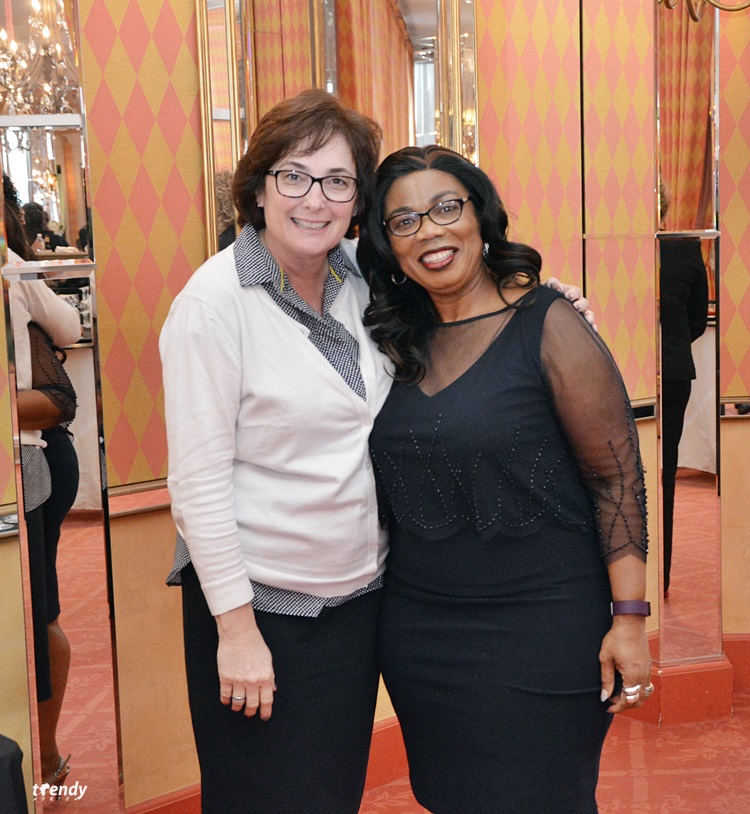
JPS recognizes Margaret Abu for 30 years of service
Fort Worth, Texas - Downtown Fort Worth was the choice destination for a
select worthy group of employees of the JPS Health Network as their institution
celebrated their long years of service at a banquet held in the high profile
City Club.
VIP’s in attendance included the President and CEO
of JPS Robert Early, Chair JPS Board of Managers Reverend Ralf W. Emerson Jr.,
Senior VP Human Resources and Learning Nikki Sumpter among others.
by Tosan Aduayi in Fort Worth
Monday, March 14, 2016
Does Nigeria Have an Economic Agenda?
There has been growing concerns about the President
Muhammadu Buhari led Nigerian Governments handling of the economy. At the
moment, there seems to be no clear cut economic blueprint for which government
policies are framed. It appears to me that every minister is working by
intuition without any economic guiding principle. The President is yet to appoint his Chief Economic
adviser, have an economic management team or a think tank that meets regularly
to discuss what is on ground, what measures needed to be put in place to
address them quickly. It is like the focus is all about looking for thieves,
catching them, and recovering what they have stolen. This is good and fair
enough. After the President has finished the recovery of the looted funds, what
next and how will the looted funds be channeled into the economy to benefit the
ordinary Nigerian?
What the ordinary Nigerian is interested in is food on his
table, good school for his children, good medical care and shelter and security
of life and property. In any economy, the goal of macro economic policy is to
achieve full employment of resources, balance growth, stable prices of goods
and services; and a stable currency through a healthy balance of payment. As it
is today, all four macro economic indices are pointing south. This government
seems not to understand or know what to do to address the situation. The
government does not need to go too far to know what to do.
Nigeria has several
development research documents that speak of ways to better manage the economy.
But the problem has always been that leaders are often not focused enough to
implement them faithfully. In most countries today, the economics of the middle
class has taken the center stage. This is because if the middle class is doing
well, the purchasing power in the hand of this class will make the economy to
grow. When in 1986, General Babangida introduced the famous Structural
Adjustment Programme (SAP), it was with good intention. But half way down the
line of implementation, the programme was derailed by Nigerians who kept crying
of the hardship the programme was putting the nation through.
President
Babangida before coming up with SAP had a retinue of very bright minds as his
advisers. Babangida had a team then that was called the Presidential Economic
Advisory Council. This body was busy preparing documents and seeking informed
opinion from operators in the private sector. He went to the point of
instituting what was then known as Corporate Nigeria — a yearly gathering of
captains of industry to tap their knowledge of the economy before any policy
initiative. When
President Olusegun Obasanjo became the President, the economy
was near its knees. He realised that he could not manage the economy all by
himself. He appointed Professor Chukwuma Soludo as his Chief Economic Adviser
and set up an economic management team. The team went to work and prepared a
document called the NEEDS. It was the second of its kind to SAP. The document
was the basis on which the nation was able to secure a debt relief from the
Paris and London clubs of creditors. In fact it became the Policy Support
Instrument for which the International Monetary Fund IMF, based its monitoring
and evaluation of the economy on. Nigerians’ expectation was that the next
government after Obasanjo would take the economy to the next level.
President
Umaru Yar ‘Adua came up with 7-Point Agenda and Jonathan the Transformation
Agenda. They were mere slogans without content or direction. President Umaru Yar’Adua followed with the
appointment of Tanimu as his Economic Adviser. He again had his economic team.
All his appointees followed the seven point agenda. The immediate past
President had his team and his economic slogan was Transformation. Buhari and
his team must realise that they do not yet have a coherent, credible agenda
that is consistent with the fundamentals of the economy as it stands today.
What the government has been saying contains some good principles and
wish-lists, but as a blue print for Nigeria’s security and prosperity, it is
largely ineffective. The President should for the sake of Nigerians who voted
him to power present a credible development agenda to Nigerians. What the
President must know is that the fundamental challenge of his government on the
economy is how to set economic objective of creating ten to twelve million jobs
over the next four years to have a dent on the ever growing unemployment and
poverty in the country.
The real challenge is to craft a development agenda to
deliver dividends of democracy within the context of broken public finance, and
an economy in which painful structural adjustments will be inevitable if
current trends in oil prices continue. Mr. President must come to terms with
the fact that programmes such as war on corruption, security, power,
infrastructure, etc, are instruments to
achieving the macro economic objective of full employment. As it appears, this
government seems to be disoriented and unorganised in the economic front.
What
is the economic slogan of this administration? What is the economic direction
of government ministries, departments and agencies? All we hear is war against
corruption, I will not devalue the naira, we will invest in agriculture, and we
will invest in solid minerals. So far, there is no policy direction toward
these sectors. This government campaigned on the basis of stimulating the economy.
Buhari’s stimulus strategy as of now is not focusing on cherry-picking projects
that can create jobs almost instantaneously, as well as on programs that can
deliver immediate returns to Nigerians. It is now all out war on corruption.
The projects and programs this administration should get into include
infrastructure, education, health, and energy. It is a shame that nine months
into the life of this administration, these sectors are yet to feel the
presence of this administration. The budget is riddled with confusion and yet
to be passed. Almost one year is gone with little to show for it on the
economy. The President has already reneged on his unemployment benefits he
promised during his campaign to pay N5, 000 unemployment benefits to Nigerians
and other social welfare provisions. The informal sector in
Nigeria is very
vibrant, with millions of underemployed youths. This ought to be one sector
this government of change should concentrate on to unleash its potential on the
economy. This sector ultimately will generate employment opportunities. This
government should wake up and face the task of reconstructing the Nigerian
economy; period.
Source:
Omoh Gabriel/Vanguard
Monday, March 7, 2016
Ex-Army Chief Badeh sent to Prison
A Federal High Court sitting in Abuja has remanded a
former Chief of Defence Staff, Alex Badeh, in Kuje Prison. Badeh was arraigned before the court today on 10
counts of money laundering. He is accused of fraudulently removing N3.97bn from
the account of the Nigerian Air Force in 2013. He used the money to purchase a
mansion at No. 6, Ogun River Street, Off Danube Street, Maitama, Abuja, which
the defendants were said to have purchased with N1.1bn.
The accused also allegedly bought a commercial plot
of land at Plot 1386, Oda Crescent Cadastral Zone A07, Wuse II, Abuja, for
N650m. They were said to have paid N878m for the construction of a shopping
mall at Plot 1386, Oda Crescent Cadastral Zone A07, Wuse II, Abuja, and another
sum of N304m to complete the construction. $1M cash is reported to have been
discovered in one of his properties. The anti-graft agency also accused them of paying
N260m to purchase a duplex at No. 19 Kumasi Crescent, Wuse II, Abuja, for
Badeh’s son. The sum of N60m was said to have been paid for the
renovation of the property and another N90m to furnish the property. The retired Air Force officer also allegedly paid
N330m to one Honourable Bature to purchase a duplex at No. 14 Adzope Crescent, Off
Kumasi Crescent, Wuse II, Abuja.
Sunday, March 6, 2016
Nigerian Police Rescue Kidnapped School Girls
The three female students of the Babington Macaulay
Junior Seminary (BMJS), Agunfoye-Lugbusi, Ikorodu, Lagos State, who were
abducted last Monday in their hostels have been rescued by the Police. The Police rescued the Barbington school girls
around Igbokuta Area of Ikorodu. No ransom was paid for their release.
A member
of the gang who took part in the abduction was said to have been arrested by
operatives of the Inspector General of Police Special Intelligence Response
Team, IRT, lead by CSP Abba Kyari, when he left the gang’s camp in Adamama
Forest in Arepo, Ogun State, off Ikorodu. Sources disclosed that the school
girls who are currently with the Lagos State Commissioner of Police, Fatai
Owoseni, was rescued following intense pressure mounted on the gang following
the arrest of their colleague by a combine team of the IRT operatives and their
counterpart at the Lagos State Special Anti-Robbery Squad, SARS, Ikeja.
source: vanguard
source: vanguard
Wednesday, March 2, 2016
Billionaire Trump avalanche super Tuesday wins
Donald Trump romped through the second biggest day
in American politics – only November presidential elections are grander –
etching his name on seven trophies in the Republican party's Super Tuesday display
case, and hoping for more. Two prizes, Texas and Oklahoma, have eluded his
grasp and went to Ted Cruz, a senator from the Lone Star State. But the rest of
the night so far belongs to The Donald.
And Marco Rubio claimed Minnesota's caucuses late
into the night. But the rest of the night so far belongs to The Donald. The
billionaire real estate tycoon has been declared the GOP primary winner in
Alabama, Arkansas, Georgia, Massachusetts, Tennessee, Vermont and Virginia.
He's leading in one undecided race and two more will end later.
Cruz held on to claim Texas on the strength of an
almost single-minded campaign strategy that ceded other southern territories to
Trump. Partly as a result, the GOP front-runner's early victories set a blowout
pace.
The tea party senator later added Oklahoma to his
column in an unexpected development: Trump had out-polled him there a week ago
by a dozen percentage points.
source: dailymail
Monday, February 29, 2016
Nigeria had over 20000 ghost workers on its payroll
Nigeria's finance ministry has saved millions of dollars for
the cash-strapped government by removing more than 20,000 "ghost workers"
from the state payroll. The eliminated ghost workers represented just a
"percentage" of "non-existent" staff who had been receiving
monthly wages, highlighting the brazen corruption in Africa's biggest economy.
![]() |
| Nigeria finance minister Kemi Adeosun |
"The salary bill for February 2016 has reduced by 2.293
billion naira ($11.53 million)," finance ministry advisor Festus Akanbi
said in a statement. Akanbi said that stricter payroll regulation would boost
the budget at a time when Nigeria's state coffers are depleted as a result of
the collapse in global oil prices.
Trimming personnel costs "is key to funding the deficit
in the 2016 budget, as savings made will ultimately reduce the amount to be
borrowed," Akanbi said. Nigerian President Muhammadu Buhari announced a
record budget in December promising to stimulate growth and build
infrastructure in the oil-rich but import-dependant nation. He has vowed to
infuse the budget with money recovered in his quest to stamp out endemic
corruption in Nigeria.
Monday, February 8, 2016
Exclusive Interview with President Muhammadu Buhari by UK Telegraph
Are
you willing to talk to Boko Haram about the missing Chibok schoolgirls?
"As long as we can establish the bona fides of
the leadership of Boko Haram, we are prepared as a government to discuss with
them how to get the girls back. But we have not established any evidence of a
credible leadership."
Is Abubakr
Shekau still the leader of Boko Haram?
"I receive conflicting information about the
status of Shekau. Some say he has been removed and replaced by a less
charismatic terrorist leader.
"I think he must be on the run, because out of
the 14 local government districts that Boko Haram used to call their caliphate,
they now do not control any now. They are scattered around the Sambisa forest
and they have resorted to attacking soft targets, people in churches, mosques
and market places, and using improvised explosive devices."
Are
you seeking any further help from the West in the fight against Boko Haram?
"I was invited by the G7 during my visit to
Europe to brief them on the issue of security Boko Haram, and I did so. I
subsequently sent Nigeria's 'shopping list' in terms of the infrastructure
destroyed. That is schools, medical facilities and other institutions, bridges
blown up, and the estimates of repair."
Did
you also ask for Western military help?
"Yes, I did, but I don't want to give any
details of that in public at present. As you know, we already have foreign
military help in terms of training missions."
And
are you asking for additional military help beyond training missions?
"I am not asking for any of that yet. I want to
be briefed first on the situation from the Nigerian military and also the
police."
The
previous government used mercenaries from South Africa in the fight
against Boko Haram, with some success. Would you consider doing the same?
"I personally was very disappointed that the
previous government resorted to mercenaries. I was also disappointed by the
recent revelations of how military allocations were also misappropriated. How
is it that Nigeria's military, which has a good record across west Africa,
cannot claim back to 14 out of 774 local governorates from Boko Haram? They
have to ask for mercenaries from South Africa? How the mighty has fallen!"
What
is your feeling on the wider terror threats across west and north Africa at the
moment, with terrorism attacks taking place in Mali and Burkina Faso?
"I think we should be very worried because with
technology, Boko Haram and other terrorists have become very mobile in all
continents, not only in Africa but also in Europe, America and Asia.
"For Africa and the Sahel, the demise of
Gaddafi's regime led to a lot of armed and trained people, especially those
from the Sahel, being dispersed. Fighting is the only thing they know, and they
are available at a fee. The danger is there, and I am pleased that Europe has
realised it too."
There
have been reports that Nigerians have been fighting for Isil in the Libyan city
of Sirte. Is that true?
"I haven't seen confirmed reports about that,
but I know that it is not only in Sirte - there are also Nigerians finding
their way to Syria too. I don't know which side, but they may be fighing for
Isil. How many, I have no idea."
Have
you ever had reports of people from the Nigerian diaspora in the UK being
involved in Boko Haram in any way?
"No, but if I do, I will immediately raise the
issue."
A
number of Nigerians use the migrant routes to come to the UK to claim asylum,
saying their lives are at risk from Boko Haram. Is is legitimate for them to do
so?
"Some Nigerians claim is that life is too
difficult back home, but then again some Nigerians have also made it difficult
for Europeans and Americans to accept them because of the number of Nigerians
in different prisons all over the world accused of drug trafficking or human
trafficking. I don't think Nigerians have anybody to blame. They can remain at
home. Their services are required to rebuild the country. If their countrymen
misbehaved, the best thing for them is to stay at home and encourage the
credibility of the nation."
Do
you think that Nigerians have an image problem abroad?
"Certainly. But we are on our way to salvage
that. We will encourage our countrymen to stay at home, work hard and make a
respectable living at home."
Your
government has launched a major corruption probe over claims that billions of
dollars of oil cash went missing during the previous administration. Some
suspects have been arrested in the UK. Are you satisfied with the co-operation
you are getting from the UK authorities?
"One of the biggest suspects is in Britain now,
although I am not going to name that person. But Britain has earned our respect
in the way it deals with these matters. Our only problem is that it seems to be
too thorough and it takes too much time. If there are obvious cases, like bank
accounts, infrastructure houses and hotels, I would hope they could do it
quicker, so that we can claim these things back promptly."
By
Collin Freeman
Friday, February 5, 2016
AMCON owed N1.1 trillion
Nigerian financial services, the Asset Management
Corporation of Nigeria (AMCON) has listed Capital Oil and Gas Industries
Limited, Seawolf, the defunct Bellview Airlines, Resort International Limited,
Timbuktu Media (owner of the defunct Next Newspaper), former Chairman of the
National Population Commission (NPC), Chief Festus Odimegwu, and 214 other
firms, their respective directors, and individuals with outstanding debts of
N1.146 trillion that have failed to visit the corporation for the resolution of
their debts.
![]() |
| Ubah Ifeanyi - Capital Oil and Gas |
While AMCON put the outstanding debt of Seawolf at N160.09
billion, it listed Uwamu Adolor, Okunlola Remi, Rasheed Mahey Rafindadi,
Wessels Alwyn, Odulami Remi, Waziri Ibrahim Dahiru and Oduntan Adetunji,
as directors of the company. Also, the list showed that Capital Oil, which is
indebted to the corporation to the tune of N104.8 billion, has Mr. Ubah Ifeanyi
Patrick, Ubah Uchenna, Ubah Chidera Graciuos, Orji Joseph Anayo, Chigbogu
Fidelia Ezinwanne, Awodein Ayodeji Tolulope, Usoro Nsikan Anthony, and Akerele
Oyinlade Mercy, as its directors. Directors of Resort International include Mr.
Wale Babalakin (SAN), who has a N132 billion judgment debt against the federal
government, and a court ruling ordering AMCON to offset his indebtedness to it
against the judgment debt. Other directors of Resort International are
Akinsanya Olayinka, Layonu Abiodun, Akibambi Temitayo Kola, Spectra Limited and
Adewunmi Abiola. AMCON listed Resort as being indebted to the tune of N36.30
billion.
Other firms on the debtor list include Tanzila
Petroluem Limited - N49.2 billion; Home Trust Savings - N25.749 billion; Suru
Worldwide Ventures - N24.41 billion; Roygate Properties - N23.261 billion;
Ziklagsis Network Limited - N20.334 billion; Lexcap Partners - N18 billion. Similarly,
AMCON also listed Anyiam Osigwe Limited - N17.247 billion; Iorna Global
Resources Limited - N15.873 billion; Hosanna Properties Limited - N14.983
billion; Unudike Enterprises Limited - N14.16 billion; Bulk Pack Services
Limited - N13.493 billion; Global Haulage Resources Limited - N11.472 billion;
Taka Continental Limited -N11.378 billion; JAG Global Resources Limited -
N11.108 billion; Felshade International Nigeria - N10.979 billion; AFRIJET
Airlines Limited - N10.886 billion; Hotel De Island (belonging to Sentor Buruji
Kashamu and family) - N10.797 billion; and Petroleum Brokers Limited - N10.681
billion, on the long list of debtors.
source: thisday
Tuesday, January 19, 2016
Crude oil drops below $28 per barrel
Oil sank to a 12-year low of less than $28 a barrel
in London on Monday as the removal of international sanctions over the weekend
freed Iran to revive crude exports, threatening to swell a glut created by
fellow OPEC members and U.S. shale drillers.
Saudi Arabia, the biggest oil
exporter, signaled again on Sunday it won’t relent in its strategy to preserve
market share even as prices crash. Global oil markets could “drown in oversupply,”
sending prices even lower as demand growth slows and Iran revives exports with
the end of sanctions, according to the International Energy Agency.
The IEA trimmed 2016 estimates for global oil demand
as China’s economic expansion weakens and raised forecasts for supplies outside
the Organization of Petroleum Exporting Countries. While non-OPEC supply is set
to drop 600,000 barrels a day in 2016, Iran’s comeback could fill that gap by
the middle of the year. As a result, world markets may be left with a surplus
of 1.5 million barrels a day in the first half.
Source: bloomberg
Monday, December 7, 2015
Nigerian couple jailed for forced slavery in the UK
A Nigerian couple who kept a man as a
slave for 24 years after illegally bringing him to Britain have both been
jailed for six years. Former NHS obstetrician Emmanuel Edet, 61, and midwife
Antan Edet, 58, kept fellow Nigerian Ofonime Sunday Inuk as a 'houseboy' after
smuggling him into the UK aged 14.
Over the next quarter of a century, he worked unpaid
up to 17 hours a day looking after the couple's two sons, cooking, cleaning and
gardening. He was also forced to sleep
on a piece of foam on a hall floor under the stairs. Sentencing the couple at
Harrow Crown Court today Judge Graham said their treatment of Mr Inuk, now 40,
left him 'conditioned' to his plight.
Judge Arran told them: 'The most serious aspect of
your behaviour towards him was that it went on for an exceptionally long period
of time, robbing him of the opportunity of leading a normal life. He suffered
as a result of that treatment and has found it difficult to adjust (to) a
normal life.'
He was hired by the Edets as a 'houseboy' and taken
first to Israel before the family moved to the UK when Dr Edet landed a post as
a gynaecologist in Chatham, Kent. The Edets changed Mr Inuk's name and added
him to their family passport as their son when they first brought him to
Britain. Mr Inuk believed they would pay him for his work. But he was forced to
keep their family home in an immaculate condition, polishing the floors every
fortnight, and was prohibited from speaking to anyone else.
The Edets confiscated his passport and stopped him
from finding a job or receiving an education, forcing him to complete menial
household chores for little or no money. Mr Inuk continued to be refused an
education when the couple moved to Scarborough in North Yorkshire, and was
subjected to taunts including 'riff raff' and 'gutter trash'.
To the outside world, they claimed he was their
adopted son, but while their other sons went on to successful careers a City
analyst and a supply teacher, Mr Inuk had to stay at home. The court was told
how there were almost 1,000 pictures of the couple's two sons - but only had
four of Mr Inuk, including one where he was peddling the boat in Flamingo Land,
in north Yorkshire. When the family moved to Walsall in the West Midlands, Dr
Edet lost his General Medical Council certificate and was told to leave the UK.
But the family then moved to London in 1994, where Mr Inuk was still treated as
a 'houseboy' despite entering adulthood.
He was rarely allowed out of the house, and only to
complete tasks like shopping. He was also told not to speak to anyone. The
Edets monitored Mr Inuk's post, and he eventually lost touch with his mother
and family back in Nigeria.They also kept his name off the electoral roll, and
he was not allowed to enter the lounge in the family home.
source: dailymail
Monday, November 23, 2015
The passing of a political giant: Abubakar Audu (1947-2015)
Prince Abubakar Audu bestrode the political
landscape of Kogi State from its creation in 1991 till his death yesterday when
he was about to make it a triple as governor of the Confluence state. Born 68
years ago into a royal family in Ogbonicha, Ofu Local Government Area of Kogi
State, the late politician showed signs of greatness at a tender age. His late
father, HRH Pa Audu Oyidi, Orego Attah of Igalaland was the paramount ruler of
Ogbonicha-Alloma.
Prince Abubakar Audu was the first elected governor
of Kogi State in 1992 on the platform of the defunct National Republican
Convention. He was responsible for the laying of the infrastructural foundation
of the state. He was responsible for the establishment of the Kogi State
University, Kogi State Polytechnic, Kogi State Broadcasting Corporation and
many other institutions in the state. His first spell as governor ended with
General Sani Abacha’s dismantling of the structures of the Third Republic on
November 17, 1993.
In 1999, Audu contested and won the governorship
election for the second time on the platform of the defunct All Peoples Party,
APP having defeated the late Arc. Stephen Olorunfemi of the People’s Democratic
Party. He was a politician cherished by the Igala people of Kogi State.
His bid for re-election was truncated in 2003 when
he lost to PDP’s Alhaji Ibrahim Idris. The 2003 loss heralded a chain of loses
in 2007, 2008 and 2011. He was cruising to victory in his sixth governorship
contest conducted on Saturday, against the incumbent governor, Capt. Idris
Wada. Audu was believed to have died yesterday morning before the election was
declared inconclusive yesterday evening.
Prince Audu was a charismatic and flamboyant leader
who was never afraid of confronting authorities in his lifetime. For many
years, he was the leader of opposition politics in Kogi State, sinking his
resources into nurturing parties such as the National Republican Convention,
the defunct APP, the defunct Action Congress of Nigeria, ACN and lately, the
All Progressives Congress. He will be sorely missed by the political community
in the confluence state.
His socio-economic contribution in the state is to
date a point of reference to the generality of the people and many aspiring
leaders. Some of his major achievements during his first two stints in office
include the establishment of three different housing schemes for public
officers consisting of over 1,500 housing units in Lokoja, the transformation of
Lokoja township with asphalt roads, street lights, aesthetic roundabouts, the
construction of inter-township and rural roads, over 75 electrification schemes
and 50 water projects.
Others include the founding of Kogi State
Polytechnic, the establishment of a television station, radio station (both AM
and FM), a state newspaper, the transformation of the colonial residence of
Lord Lugard into an Ultra-Modern Government House Complex, the construction of
office blocks for ministries as the new state had no office accommodation, the
construction of shopping arcade complex to enhance commercial activities, among
others. He was regarded as the father of development in Kogi State.
source: Vanguard
Tuesday, November 17, 2015
Covenant Voices of South Africa win international accolades
Covenant Voices, a South African mass gospel
choir, have become an International multi award winning group after they won the
Akademia Music Award for Best Contemporary Christian Music Video for ‘Children’
in the November 2015 Akademia Music Awards, adding to their previous success three months ago when they won, 'Best Gospel Song' at the August 2015 edition of
Akademia awards in Los Angeles, United States of America.
This became the first initiative of the Youth
Empowerment Project (Y.E.P.) of Tim Omotoso Global Outreach. They are based in
Durban, South Africa, and their music has Traditional Zulu, Jazz, R&B and
Contemporary influences.
Wednesday, November 11, 2015
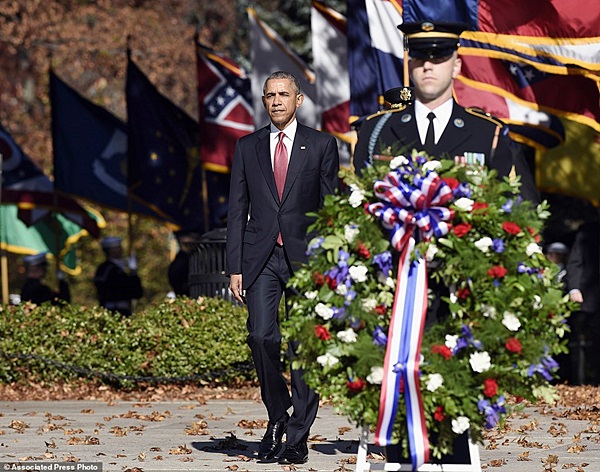
Images of Veterans day
America honored its greatest heroes today as
Veterans Day parades and commemorations took place across the country, paying
homage to the sacrifices made by those in uniform. President Barack Obama led
tributes in Arlington National Cemetery, Virginia, by laying a wreath at the
Tomb of the Unknowns - a poignant tribute to all those killed in conflicts
whose remains could not be identified - as New York held its annual Veterans
Parade, the largest to take place in the country.
Photo Credit: Getty Images
Monday, November 9, 2015
Virgin Atlantic ditches Nigerian based Cabin Crew
Virgin Atlantic Airways has announced that it will
be discontinuing with the services of Nigerian based cabin crew in its
operations. Reacting to unconfirmed reports that the airline was withdrawing its
services from Nigeria, its Nigerian Sales Agent, Chief John Adebanjo; "We have
decided that we will no longer have crew based in Lagos. This is by no means a reflection on our
Lagos-based cabin crew.
The primary purpose of our locally based cabin crew has
been to provide cultural expertise and customer feedback has shown us that this
is no longer a requirement on the Lagos route”.
He further stated; ‘’The additional complexity
required to operate an international crew base where there are no foreign
language requirement means it is no longer sustainable going forward.
This announcement has no impact on our flying
programme and we plan to continue flights between Lagos and London. ‘’After 14
years of flying the route, we remain committed to servicing the Nigeria people,
whether it be for business, family or education.’’
New anti-corruption czar named for Nigeria
President Muhammadu Buhari has named a former
operative of the Economic and Financial Crimes Commission (EFCC), Ibrahim Magu as the new Chairman after the sack of Ibrahim Lamorde. During his time at the EFCC, he
led investigations into the affairs of officials including former Delta
Governor James Ibori and current Senate President, Bukola Saraki. Magu is a recipient of USG and London
Metropolitan Police institute training.
He reportedly worked with Ribadu to jail his
brother-in-law and former Bank of the North chief, Shettima Bulama. Bulama was
later pardoned by former President Goodluck Jonathan.
He is a member of the investigative committee
convened by National Security Adviser (NSA), Babagana Monguno on the orders of
President Muhammadu Buhari to probe the procurement of arms in the Armed Forces
from 2007 till now. He is a Chief Superintendent of Police.
Monday, November 2, 2015
5 things Buhari must do to define ‘CHANGE’
President Muhammadu Buhari, who was inaugurated May
29, is the antithesis of the stereotypical Nigerian politician: incorruptible,
soft-spoken, self-effacing and deliberate.
He embraces the nickname “Baba Go-Slow and Steady.” Buhari’s unhurried
style has its downsides, however: It took him an unprecedented four months to
name a solid but un-extraordinary cabinet.
His reform agenda appears to be sauntering out of the gates, according
to the civil society-run Buharimeter.
In the meantime, the challenges facing Africa’s most
populous nation and largest economy continue to grow: Oil revenues are down,
currency value has slipped and Boko Haram has killed more than 1,700 since
June. Nigerians nevertheless expect
their new president’s reform agenda to show tangible results, and soon. Given
these imperatives, here are five things Buhari can do to get the ball rolling:
1.
Carefully clean house. Buhari’s reform agenda probably
faces its greatest threat from corrupt, old-school politicians within his own
All Progressives Congress (APC) party.
Buhari should neutralize some of the APC’s shadiest figures, who could
emerge as “veto players,” as described in Carl LeVan’s recent book.
Examples of these kleptocrats are not hard to
find. The U.S. Department of Justice has
accused one sitting APC governor of helping former dictator Sani Abacha steal
at least $458 million from state coffers.
Likewise, both APC candidates in the upcoming Kogi and Bayelsa State
governorship elections have been indicted by Nigeria’s anti-corruption agency.
Admittedly, housecleaning carries political risks
for Buhari. After all, his victorious electoral coalition included powerful
defectors from former president Goodluck Jonathan’s People’s Democratic Party
(PDP). If he unduly antagonizes these establishment
figures, they could derail his party’s newfound dominance by joining their
former comrades in the opposition PDP.
2.
Pare down the parastatals.
Buhari has an opportunity to realize immediate savings by eliminating or
merging some of Nigeria’s more than 500 federal parastatals and boards.
Parastatals are government-operated companies or commercial agencies. Pundits allege that past presidents used
parastatal appointments to cultivate national political allies and provincial
cronies. These institutions, which range
from the lucrative to the modest to the moribund, have long been a cornerstone
of corruption in Nigeria — a complicated topic expertly explained by Daniel
Jordan Smith.
Buhari may also want to disband some nice-to-have
but non-essential parastatals in light of competing priorities and current
fiscal constraints. Does Nigeria need to
spend more than $4 million annually on a Center for Space Transport and
Propulsion? Is there an effort underway to rescue the supposedly stranded
Nigerian astronaut featured in this legendary scam letter?
![]() |
| President Muhammadu Buhari |
3.
Tame the white elephants.
Buhari’s apparent determination to revive two “white elephant” economic
sectors — domestic oil refineries and steel mills — worry industry
experts. Nigeria is replete with these
kinds of investment projects where state-owned enterprises are funded for long
periods even if they incur huge losses.
For decades, Nigerian leaders have thrown good money after bad at these
projects because, as Robinson and Torvik argue, white elephant projects yield
short-term political gains.
Buhari, like any of the rest of us, could stumble
into a sunk cost dilemma where his efforts to maximize future returns of
Nigeria’s white elephants only increase their cumulative losses. Instead, he
should address the graft, inconsistent policies and opaque privatization deals
that experts say turned these industries into white elephants in the first
place.
4.
Rein in subnational debt.
As Buhari tries to put Nigeria’s public finances back in order, the
balance sheets of the country’s 36 states are sinking deeper into the red. In a decentralized federal system like
Nigeria’s, state budgets typically affect the lives of ordinary citizens more than
federal spending does. Since taking office, Buhari has already bailed out 27
cash-strapped states to the tune of $2.1 billion. States’ borrowing trends are risky and need
to be addressed, according to a recent report by the African Development Bank.
All but a few states generate minimal revenue
outside of their monthly allocation of Nigeria’s anemic oil income. While Nigeria’s national debt is still
relatively low by global standards, fiscal federalism means that if states
default on their debts, the federal government foots the bill. Buhari’s reasons for watching state borrowing
should also be personal: One of the stated reasons for the 1983 military coup
that first brought him to power was runaway borrowing by state governors.
5.
Legislate for the long run.
Nigeria will need to feel the “Buhari Effect” (the sense, evident in a
recent New York Times article, that there is a new sheriff in town) long after
the president’s tenure is over. The best
way for him to protect his legacy is to partner with the National Assembly to
enact legislation enshrining key reforms.
With few other politicians like him on the horizon, Buhari should put his
legacy in writing.
A good place to start would be an act prohibiting
the use of “security votes.” Both a definitive article by Uche et al. and a
2007 Human Rights Watch report illustrate how these secretive budgetary line
items are used by officials at all levels of government as slush funds. Even
Nigeria’s leading anti-corruption agency had a $1,000,000 security vote
included in its 2014 budget. Buhari has his work cut out for him.
Matthew
Page is an international affairs fellow at the Council on Foreign Relations.
You can follow him on Twitter at @MatthewTPage.
Subscribe to:
Posts (Atom)