Wednesday, July 25, 2012

Nigeria: 23 Oil Marketers to be prosecuted for Fraud


Abuja - In keeping with the Federal Government’s promise to prosecute those that were alleged to have abused the fuel subsidy scheme, the Economic and Financial Crimes Commission (EFCC) will finally set the stage for the arraignment of oil-marketing firms and their directors at the Lagos High Court today.

The EFCC Tuesday named the suspects to include seven oil companies and 12 individuals who have been indicted during investigations into the management of the fuel subsidy scheme and would be arraigned before judges of the Lagos State judiciary. Some of the suspects are scions of chieftains of the Peoples Democratic Party (PDP) and party supporters.

The suspects, comprising seven oil companies and 12 individuals, are: Nasaman Oil Services; Eterna Oil and Gas Plc; Ontario Oil and Gas Plc; Nadabo Energy Limited; Pacific Silver Line Limited, Axenergy Limited and Fago Petroleum and Gas Limited.

The 12 individuals involved in the scam are: Mamman Nasir Ali, Christian Taylor, Mahmud Tukur, Ochonogor Alex, Walter Wagbatsoma, Adaoha Ugo-Ngadi, Fakuade Babafemi Ebenezer, Ezekiel Olaleye Ejidele, Abubakar Ali Peters, Jude Agube Abalaka, Abdullahi Alao and Oluwaseun Ogunbanbo.
Mamman Nasir Ali, who runs Nasaman Oil Services, is the son of former PDP National Chairman, Col. Ahmadu Ali (rtd), who was also the chairman of the Petroleum Products Pricing and Regulating Agency (PPPRA) board.
Chairman, Economic and Financial Crimes Commission-EFCC; Mr. Ibrahim Larmode

Mahmud Tukur, who runs Eterna Oil and Gas Plc, is the son of the current PDP National Chairman, Alhaji Bamanga Tukur, while Abdullahi Alao of Axenergy Limited is the son of popular Ibadan-based tycoon, Alhaji Abdulazeez Arisekola-Alao. Ugo-Ngadi, on her part, is the Managing Director of Ontario Oil and Gas Plc, where its founder, Wagbatsoma, is the executive vice-chairman. 

But whilst the individuals were identified as directors of the oil-marketing firms, Ejidele is a director of the accounting firm, Akintola Williams Deloitte, while Ebenezer is a member of staff of PPPRA.
Also, some of the suspects such as Alao may be tried twice for allegedly conniving with different companies to defraud the government.

According to a statement from EFCC spokesman Wilson Uwujaren, Nasaman Oil Services; Ali and Taylor are to face charges bordering on obtaining N4,460,130,797.94 from the Federal Government under false pretences. The sum was alleged to have been fraudulently obtained as subsidy payments from the Petroleum Support Fund (PSF) for the purported importation of 30.5 million litres of petrol from SEATAC Petroleum Limited of British Virgin Islands. Also, Alao and Axenergy Limited will be tried for allegedly obtaining by fraud N2,640,141,707.75 from the government, being payments received from the PSF for the purported importation of 33.3 million litres of petrol.

Others, including Tukur, Alex, Alao and Eterna Oil and Gas Plc, will be arraigned for fraudulently obtaining N1,899,238,946.02 from the PSF for the purported importation of 80.3 million litres of petrol.
Also, Nadabo Energy Limited, Peters, Abalaka and Pacific Silver Line Limited are to be prosecuted for allegedly obtaining N1,464,961,978.24, being payments fraudulently received from the PSF for the purported importation of 19.4 million litres of petrol.

Wagbatsoma, Ugo-Ngadi, Ebenezer, Ejidele and Ontario Oil and Gas Nigeria Limited will be arraigned for fraudulently obtaining N1,959,377,542.63 from the PSF for the purported importation of 39.2 million litres of petrol. On their part, Fago Petroleum and Gas Limited and Ogunbanbo are to be arraigned for fraudulently obtaining N979,653,110.20 from the PSF for the purported importation of 33,627,840 litres of petrol.

Those to be arraigned before Onigbanjo on a nine-count charge bordering on conspiracy, obtaining money by false pretence, forgery and use of false documents are Tukur, Alex, Alao and Eterna Oil and Gas Ltd.
The company and the individuals were alleged to have on April 28, 2011, in Lagos, fraudulently obtained N676.9 million from the Federal Government purporting same to be payment accruing to Eterna Oil under the PSF.

They are also accused of falsifying claims to have purchased 33,288,388 litres of petrol from Mercury Energy Trading AS and imported to Nigeria through Ex-MT Fulmer, Ex-MT Emirates Star and Ex-MT Panther. Those to appear before Justice Abiru are Wagbatsoma, Ugo-Ngadi, Ebenezer, Ejide and Ontario Oil and Gas Nig. Ltd.

The second case before Justice Abiru also involves Alao and his Axenergy Oil. Alao, who is also to be charged before Justice Onigbanjo will face another nine-count charge bordering on obtaining by false pretence, forgery and use of false documents before Justice Abiru.

He is accused of fraudulently obtaining N2.5 billion in December 2010 from the Federal Government as subsidy payments for supplying13,364,284 and 20,014,627 litres of petrol from Ex-MT Gavros and Ex-MT Nippon Princess. The accused persons before Justice Abiru are facing a nine-count charge for conspiracy, obtaining money under false pretence, forgery and use of false documents. They are accused of fraudulently obtaining over N1.9 billion from the Federal Government under the PSF from July to December 2010.
All the accused persons were also alleged to have forged bills of lading and other vital documents, which they allegedly used in perpetrating the fraud.

The EFCC said their alleged offences contravened Sections 1(3) of the Advance Fee Fraud and Other Fraud Related Offences Act of 2006 and Sections 467 and 468 of the Criminal Code Laws of Lagos State 2003. Part of the charges preferred against Wagbatsoma and his co-accused, includes conspiracy for obtaining N1.9 billion under false pretence, contrary to Section 8, punishable under Section 107 of Advance Fee Fraud & other related offences.

They are also accused by the government of altering and forging documents contrary to Section 468 and 467 of the Criminal Code Cap. C17, Vol. 2, Laws of Lagos of State of Nigeria, 2006, respectively.

The charge read in part: “That you, Walter Wagbatsoma, Adaoha-Ugo-Ngadi, Fakuade Babafemi Ebenezer, Ezekiel Olajide Ejide and Ontario Oil and Gas Nig. Ltd. did conspire to obtain property by false pretence contrary to Section 8 punishable under Section 1 of the Advance Fee Fraud and other Related Offences on 7th July, 2010, within the jurisdiction of this court, conspired to commit an offence to wit: obtaining the sum of N340,178,111.231 from the Federal Government of Nigeria, purporting to be Petroleum Support Fund, which sum was in excess of the actual value of the product imported into Nigeria by Ontario Oil and Gas Ltd.”

They were also said to have collected N340,015,198, being “Excess of the value of the actual product (12,070,706 litres) delivered by Mt. Union Brave to Integrated Oil and Gas Ltd on your behalf as against  19,681,731 litres you falsely  claimed to have discharged”. The suspects are among over 140 individuals and organisations involved in the ongoing investigations into the subsidy payments by the EFCC.
“More suspects will be arraigned periodically as the investigation progresses,” the EFCC said in its statement.

Meanwhile, the EFCC yesterday filed a separate suit before Justice Samuel Candide-Johnson of the Lagos High Court against Durosola Omogbenigun, Peter Mba, Integrated Resources Limited and Pinnacle Oil and Gas. It was gathered that all the four defendants are to appear in court tomorrow for arraignment.
They were alleged to have conspired to obtain money under false pretences punishable under Section 1 of the Advance Free Fraud and Other Related Offences Act, 2006.

They were also alleged to have on February 4, 2011 obtained from the Federal Government N986,154,970.41 purported to be subsidy payable to Integrated Resources Limited for the importation of 19,347,753 litres of petrol which they claimed from NIMEX Petroleum Limited of Gibraltar.

They will also, among others, be charged with the intent to defraud the Federal Government, for obtaining N343,182,230.20 on or about September 15, 2011, purporting to be subsidy payable to Integrated Resources Limited for  4,115,951 litres of petrol which they claimed to have purchased from Alcamo Integrated Limited/Vitol SA Geneva and allegedly imported to Nigeria through the mother vessel MT Box and MT Althea Ex MT Sea Power as the daughter vessels.

Indicted Oil Firms
Nasaman Oil Services
Eterna Oil and Gas Plc
Ontario Oil and Gas Plc
Nadabo Energy Limited
Pacific Silver Line Limited
Axenergy Limited
Fago Petroleum & Gas Ltd
Integrated Resources Ltd
Pinnacle Oil and Gas

Indicted Persons
Mamman Nasir Ali
Christian Taylor
Mahmud Tukur
Ochonogor Alex
Walter Wagbatsoma
Adaoha Ugo-Ngadi
Fakuade B. Ebenezer
Ezekiel Olaleye Ejidele
Abubakar Ali Peters
Jude Agube Abalaka
Abdullahi Alao
Oluwaseun Ogunbanbo
Durosola Omogbenigun
Peter Mba

source: thisday newspaper

Monday, July 23, 2012

Five Nigerians die in New York Auto Crash


Three women and two children were killed early Sunday morning when a Mercedes Benz GL sport-utility vehicle they were travelling in crashed. The victims were returning from a festival in Queens celebrating a two-day annual convention of the Arondizuogu Patriotic Union National Congress of North America at the Golden Terrace banquet hall, on Atlantic Avenue less than a mile from the accident site. Three others survived.

The vehicle struck a concrete pillar, flipped and hit a tree. Three adult passengers, all women, were declared dead at the scene, as were an 8-year-old girl and a 9-year-old boy. The driver, a 45-year-old woman, is in stable condition at Jamaica Hospital, along with a 26-year old male and a 7-year-old boy.

“The convention was supposed to bring us together — not end in tragedy,” said Anthony Nwankwo, 49, from Houston. The convention draws about 200 people from across the United States. One of the victims is identified as Michigan woman, Nnenna Obioha, who was in her 50s or older.

According to reports, the driver swerved to avoid a car coming through the intersection at Atlantic Avenue and the Van Wyck service road. The SUV climbed onto the sidewalk, struck a pillar supporting the tracks for the AirTrain to Kennedy International Airport and flipped onto its passenger side and then came to a rest when its roof struck a tree.
Surveillance video from a nearby gas station shows a fast-moving black SUV travel through an intersection. A moment later, a startled customer suddenly scurries toward the street.


Chief Stephen Browne of the Fire Department of New York called it the worst single car accident he had seen in his 26-year career. "To see this much human life devastation in a single-car accident on a side street is not normal," he told the News.

Source: NYtimes

Wednesday, July 18, 2012

Six women rape man to death in Benue State, Nigeria

His fame and financial breakthrough pushed him into having up to six wives. His love for sex equally contributed to his patronage of the most beautiful girls in Ugbugbu Owukpa, Ogbadibo Local government area of Benue State where a man who was identified as Uroko Onoja was allegedly raped to death by his 6 jealous wives in the early hour of Tuesday.

Trouble started on Tuesday morning, precisely 3 am when Uroko returned from Ochanja, a popular joint in the small community of Ugbugbu and headed to the room of his youngest wife. The other wives who according to the youngest wife, Odachi had a meeting before Uroko returned home invaded her room with knives and sticks, demanding that their husband have sex with all of them at once. Uroko who resisted their attack was overpowered by the women who ordered that the sex march begin with the youngest wife and to continue in that order to the top.

Our correspondent reported that Uroko stopped breathing when the fifth woman was making her way to the bed. “Suddenly, my husband stopped breathing, and they all ran out, still laughing, but when they saw that I could not resuscitate him, they all ran into the forest.


Uroko whose body has been deposited in a nearby Mortuary was until his death one of the famous persons in the village.  According to most young people in the community, he was a philanthropist who had contributed positively to the growth of the community.

When contacted, the village head, Mr. Okpe Odoh affirmed that the matter had been reported to the police and investigation was ongoing even as the youth of the community are helping the police in search of the escaped wives.

source: naijanews

Nigeria Imports Diesel from Niger


Nigeria, Africa's largest oil producer, has begun to import refined diesel fuel from Niger, its northern neighbour, oil market traders and truck drivers said recently. Fuel stations in the northern city of Katsina on the border with Niger stock diesel imported from Niger's Soraz refinery in Zinder, 80 kilometres (50 miles) from the border with Nigeria.

"We have imported 90 trucks of diesel from Niger in the past four months in three batches of 30 trucks each, Lawal Dahiru Mangal, a fuel market trader in Katsina said.
"We secured import license from the (Nigerian) government for the importation of diesel from the Soraz refinery in Niger which we supply fuel stations in Katsina and neighboring towns", said Mangal of MD Mangal petroleum company.


Nigeria, world's eighth largest oil producer, relies on fuel imports from some foreign countries to meet domestic demands as its four refineries, with a combined installed capacity of 445,000 barrels per day, are underperforming.

They have been grounded for years due largely to corruption and mismanagement. It produces about 2.2 million barrels of crude per day which it exports and imports refined fuel. Niger-refined diesel is cheaper than the one Nigeria imports from other countries, Mangal said.
A litre of Niger-imported diesel sells at 160 naira (one dollar) in Katsina compared to 170 naira it sells in other parts of the country.

"We source diesel from Mangal petroleum which imports its consignment from Niger," Abddullahi Maikaita, a fuel attendant at a filling station in Katsina said.
In 2000 Nigeria removed its subsidy on diesel.

Last November, Niger opened its first refinery in Zinder following the discovery of oil in Agadem, 700 kilometres east of its capital Niamey with a daily production capacity of 20,000 bpd.

Source: AFP

Saturday, July 7, 2012

Prodigal Wife Returns after 20 years; seeks home


TWENTY years after separating from her husband, Bukola suddenly reappeared in his apartment at Oshodi. She is now in her late fifties. Her husband, Adeagbo Busari, had since married another woman and had kids. Bukola herself had tried her luck with another man and got a child too.

But fate had not been kind to Bukola. Her second husband died, leaving her virtually destitute with a child of fifteen. Now she desperately needed a home to call her own. She therefore decided to return to the husband of her youth (oko aaro in Yoruba). After all, she probably thought, she had four children for Busari: Akeem (M) 37, Muritala (M) 35, Samsondeen (M) 32 and Moshood (M) 27.

Adeagbo is however uncomfortable with the development. He therefore headed to the customary court (Igbeyinadun) in the Oshodi. He is seeking the dissolution of the marriage he contracted with the respondent in 1975 under the Native Laws and Customs, on the grounds that;
*They had been separated for over 20 years
* That  Bukola has returned to his house to threaten his life and that of the children.
*That there is no more love to sustain the marriage.

The petitioner was however absent in court but was represented by his counsel while the responded, who was accompanied by one of her children, Samsondeen, was present.
In court, Bukola did not look too well. Asked if she had secured another apartment, she answered in the affirmative, but when asked the address of her new apartment, she mentioned No 24, Olatunbosun Street, Ewutuntun, Oshodi, the very same residence from which the petitioner, Adeagbo’s is seeking her ejection.
Samsodeen, who was asked how they have been coping with her, said, “My father owns the three bedroom apartment. He has a room to himself, his second wife occupied the second room, while my brothers and I with the three children of the second wife, making seven of us altogether, occupy the third room. We all slept together in that room, until my mother came in.

“But because we felt my mother needed rest because of her state of health, we all vacated the room for her, and have since been sleeping in the sitting room,” he said.
The acting president of the court, Mrs. Iyabode Adetola, advised Samsondeen, that his mother, bukola, needed more care, both by her children, and her former husband, Adeagbo, because of her state of health. She also suggested that the respondent be given adequate medical attention, and that her children should plead with their father, who wants her out of the house, to give them more time, to get another apartment for her.
What are your thoughts?
Source: guardian

Monday, July 2, 2012

Nigeria, a rugged road to high returns


LAGOS - Bomb blasts, gun attacks, airline crashes, kidnappings, industrial-scale oil theft, armed robberies and fraud costing billions of dollars.
Such things might give pause to anyone thinking of opening a business. In Nigeria, they happen with alarming frequency, and yet investors just keep coming.
The reasons are many: alluring returns in this high-risk frontier market; a huge and growing population with latent potential for a consumer boom; light crude oil ideal for making motor fuel; and sophisticated financial markets.
"We know it's not risk free," says Charles Robertson, global Chief Economist at Renaissance Capital. "But look around the world and find another economy with 160 million people growing at 7 percent with such potential. It's a struggle to find them."
Nigeria can look like it's teetering on the cusp of chaos, but it is also Africa's second biggest economy and top oil producer.
"Nigeria is the best kept secret in the world. Anybody who doesn't invest in Nigeria only has himself to blame, going forward, if he misses out," industrialist Aliko Dangote told Reuters in an interview at his Lagos office.

"I don't really know of any place where you can make as much money as you make in Nigeria."
As Africa's richest man, he should know. Last year, the cement tycoon's Nigeria investments boosted his personal fortune more than fivefold - a bigger rise than anyone else on the Forbes list of world billionaires - to $13.8 billion.
Dangote is from northern Nigeria, where Islamist insurgents of the Boko Haram movement have killed hundreds in daily gun and bomb attacks this year in a bloody anti-establishment offensive.
Dangote, whose interests are mostly in the south, with some exposure to the north, does not let the violence affect his business decisions.
"Boko Haram have not destroyed any business here. They have not gone to any factory and planted a bomb," he said.
"Because of drugs barons fighting with the Mexican government, does it mean no one will go and invest in Mexico? No. People are rushing there."
"DEMOGRAPHIC DIVIDEND" TRUMPS INSTABILITY?
Still, if you want an example of how violence and political instability in Nigeria can slice millions of dollars off your profit margin, look no further than PZ Cussons.

The soap maker announced two profit warnings in the first quarter of this year, blaming a hit to sales from social unrest in Nigeria, its biggest market, where it makes a third of its revenue.
The country erupted into strikes and protests in January when President Goodluck Jonathan's government made an abortive attempt to end a popular fuel subsidy. The strikes lasted only a week, but the central bank said they cost $617 million a day.
The violence in the north also worsened around that time.
"Insurgency in the north clearly had a detrimental impact on PZ's business, and on (food maker) UACN, which has distribution hubs there," Matthew Pearson, Standard Bank's head of African Equity Product, told Reuters on a visit toLagos.
But in the longer term, both firms are betting Nigeria's big population will turn into a massive consumer market.
"The demographic dividend is colossal," Pearson said.
A failure to recognize such long-term opportunities in emerging markets astounds Stephen Jennings, CEO of investment bank Renaissance Group.
"Whether we are talking about political evolution in Russia, or economic development in Africa, there remains a clear overemphasis on current difficulties and constraints, and an under-appreciation of the pace and magnitude of modernization and structural change," he told an investor conference this week.
Some clearly appreciate it. The CEO of South Africa's Shoprite, Whitey Basson, said in February he saw scope for 700 stores in Nigeria, up from two now, arguing that even if 60 percent live in poverty, the other 40 percent still outnumber South Africans.

And oil companies like Shell are making enormous profits in Nigeria - and renewing onshore licenses - despite the fact that armed gangs steal a growing portion of their oil.
Foreign direct investment into Nigeria has hovered between $6 billion and $8.5 billion since 2007, World Bank figures show, apparently unresponsive to its various crises.
FEAR OF OFFICIALDOM
Business people say the risk from such insecurity pales compared with that of government interference.
Jonathan's administration says it is working to remove impediments such as corrupt officials and onerous bureaucracy, but they admit it is a huge task.
"Look at the port. That's a bigger investor concern than bomb blasts or plane crashes," said Tony Elumelu, chairman of Lagos-based Heirs Holdings, a fund that invests across Africa.
Corrupt officials at Lagos port - one of the busiest in Africa - slow down deliveries to extort money from importers, a bottleneck to growth and cause of Nigeria's high living costs.
"For many businesses, the difficulty of getting goods cleared ... is their biggest complaint," Elumelu said. "The good news is the government is now taking action to improve it."
Such "official risk" is what oligarchs like Dangote can use political ties to mitigate. Not everyone has such connections, but players with dominant positions in markets that don't require much government cooperation can still fare well.

"If you look at Nigeria Breweries, short of expropriation, it's going to continue to effectively print money, because of the size of the market ... irrespective of the management of the country," said Fola Fagbule, Vice President of Origination and Coverage at Africa Finance Corporation.
Other sectors, such as infrastructure, face daunting hurdles from obstructive officials. Telecoms firms need licenses. They need land to put up masts. They need permits to set up base stations.
All complain of extortion by officials to keep stations open.
The downside was enough to persuade Vodacom to pass up investing in Vmobil - now owned by Bharti Airtel - in 2005, citing an "inappropriate level of risk".
Yet telecoms is now one Nigeria's most profitable sectors, and Nigeria is Bharti's most profitable African market.
In his last year as Vodacom CEO in 2008, Alan Knott-Craig said he regretted the decision not to set up shop in Nigeria. Vodacom is now making moves to come back.
Rival MTN had no such qualms, and today it is Nigeria's leading operator.
Among the risks it faces are "poor infrastructure, lack of security, vandalism, multiple taxation, over-regulation ... unlawful interference with telco infrastructure by government agencies and ... prejudicial court judgments," says Funmilayo Omogbenigun, MTN Nigeria's corporate affairs manager.
Despite that discouraging litany, Nigeria remains MTN's biggest cash cow, making $2.5 billion in core profit in 2010 and again in 2011.
The telecoms success has raised hopes for Nigeria's moribund power sector, if the government gets round to privatizing it.
"Nigeria's often surprised on the upside, and telecoms is a classic example. People are looking at power in the same way," Fagbole said.
"It looks messy, it looks difficult, but if you sit on the sidelines and it turns out to be this massive honey pot, you'll live to regret it."

Source: yahoo.com (Tim Cocks | Reuters)

Tuesday, June 12, 2012

EB-5 Immigrant Investor Program: Cash for Citizenship


Thousands of wealthy foreigners are lining up for VISA’s, enabling them to invest in the USA while putting them on a path to citizenship in the process. The State Department expects to issue over 6,000 "investor visas" in the current fiscal year, which would be an all-time record.

Under the government's EB-5 Immigrant Investor program, foreign investors can get conditional visas that allow them and their families to live, work and attend school in the U.S. To qualify for the visa, they must invest at least $1 million in a new or recently created business, or $500,000 for businesses in rural or high-unemployment areas.

The investment must be demonstrated to have created or preserved at least 10 full-time jobs for U.S. workers within two years. Assuming this condition is met, investors and their families graduate to permanent resident status, and can apply for full citizenship three years later.

While the EB-5 program has been around since 1990, demand has been surging as of late, fueled in large part by China's growing elite, who accounted for 70% of the roughly 3,500 investor visas issued last year. State Department officials expect the program's quota of 10,000 visas per year, which includes visas given to the spouses and children of investors, to be filled for the first time ever within the next year or two.

Some critics of the U.S. program question the fairness of letting wealthy immigrants pay for special treatment, while others say investments and job creation claims need stricter vetting. Immigrants who arrive via the program have no guarantee of recovering their investments, and may face deportation if they don't produce the required number of jobs.

Of the roughly 12,000 immigrants who've arrived on the EB-5 investor visa, just 39% have earned permanent residency, according to USCIS data. There's also the lengthy application and approval process. The program's reputation for red tape had dampened interest among foreigners in the preceding years.

Whatever the program's problems, interest has been growing in recent years, and meanwhile, the U.S. has faced increasing competition from other countries trying to woo well-heeled foreigners with the promise of residency or citizenship.

In the U.S., the immigrant investor program has been responsible for at least 46,810 jobs and more than $2.3 billion in investments since its inception in 1990, according to U.S. Citizenship and Immigration Services. That's a small fraction of overall foreign investment in the U.S., but it comes at no cost to the government. Were the EB-5 program to meet its 10,000-visa quota, it would contribute more than $4.4 billion to GDP and create or preserve nearly 75,000 jobs annually, according to a 2010 report prepared for the government by consulting firm ICF International.

The EB-5 program is up for renewal in the fall, and while USCIS says it has "no indication" that the initiative will be allowed to expire, some supporters are more wary.
Source: yahoo news

Friday, May 18, 2012

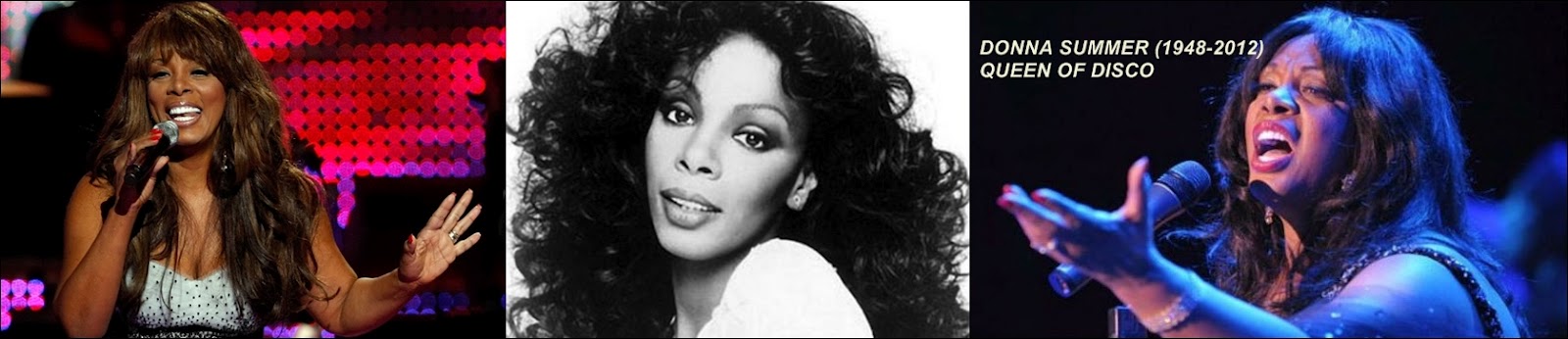
Donna Summer Remembered (1948-2012)


Boston City Councillor Charles C. Yancey today reminisced growing up with singer, actress, and five-time Grammy Award winner, Donna Summer, who succumbed to cancer today in Florida at the age of 63.
Summer, whose older sister married one of Councillor Yancey’s brothers in the 1960s, was a close friend of the Yancey family.

Summer, who was born as LaDonna Adrian Gaines to Andrew and Mary Gaines on December 31, 1948 in Boston, graduated from the Jeremiah E. Burke High School in Dorchester. She perfected her vocal talent by singing gospel music at the Grant African Methodist Episcopal Church in Boston.

Summer relocated to Europe in 1968 and took part in the German productions of several musicals, including Haare, Porgy and Bess, and Godspell. Summer, in 1975, recorded "Love To Love You Baby", which transformed her into an international star and earned her the titleQueen of Disco. She went on to score four number one singles, fourteen top ten hits, three platinum albums, five Grammy awards, and twelve other Grammy nominations.

Summer won Best R&B Vocal Performance Female for Last Dance in 1978, Best Rock Vocal Performance Female for Hot Stuffin 1979, Best Inspirational Performance for He's A Rebel in 1983, Best Inspirational Performance for Forgive Me in 1984 and Best Dance Recording for Carry On in 1997. She also picked up 3 American Music Awards in 1979, the NAACP Image Award in 1980, and a star on the Hollywood Walk of Fame in 1992.

Councillor Yancey, on July 12, 2008, presented Summer with a City Council resolution commending her successful career and her generosity to humanitarian needs. Summer contributed much of her time and money to such organizations as UNICEF, Music Cares, The Gay Men's Health Crisis, Race to Erase MS, the Juvenile Diabetes Foundation, and the National Colorectal Cancer Research Alliance.
“We’re very proud of her international presence and her philanthropy. She was down to earth in spite of her fame and wealth,” Yancey said.

Summer, who has appeared in eight movies, was the first female artist to have three number one solo singles in one year, the first female artist to use synthesizers, and the first artist to create an extended play song for use in dance clubs.
“Donna Summer will be solely missed by my family and the entire City of Boston. We are proud of the fact that she was a daughter of Boston,” Yancey said.

A Trendy Africa USA Report

Thursday, April 26, 2012

THISDAY NEWSPAPER OFFICES BOMBED IN KADUNA AND ABUJA


ABUJA, Nigeria — A suicide bomber detonated a car loaded with explosives Thursday at the office of a major Nigerian newspaper in the country's capital and another man threw a bomb near another newspaper office in Kaduna, killing at least six people in the attacks, witnesses said.
The attack in Abuja struck the offices of ThisDay, an influential daily newspaper. The bombing in Kaduna struck a building housing offices for ThisDay, The Moment and The Daily Sun newspapers, witnesses said.

No group immediately claimed responsibility for the attacks, though they mirrored others previously carried out by a radical Islamist sect responsible for hundreds of deaths in Nigeria this year alone. In Abuja, the suicide bomber rammed his car through the gates of the ThisDay office and drove into the reception area before the explosion, said Nwakpa O. Nwakpa, a spokesman for the Nigerian Red Cross. The blast killed at least three people and wounded others, Nwakpa said.

Soldiers and police officers quickly surrounded the building, which had part of its roof torn away and all its windows blown out by the force of the explosion. The attack in Kaduna also included a car loaded with explosives, though people at the newspaper office quickly surrounded the car, witnesses said. The driver then began shouting that there was a bomb inside the car, witness Jemilu Abdullahi said.

Those there allowed the man to open the trunk of the car and he pulled out an object and threw it at the crowd, which exploded, Abdullahi said. Abdullahi said at least three people died in that blast. It is unclear why bombers targeted ThisDay, a newspaper owned by the politically connected media mogul Nduka Obaigbena. In 2002, rioting over an article published by ThisDay suggesting the Prophet Muhammad would have married a Miss World pageant contestant killed dozens in Kaduna.

The attack comes as the radical Islamist sect known as Boko Haram continues its violent campaign against Nigeria's weak central government. The sect is blamed for killed more than 440 people this year alone, according to an Associated Press count.

Source: AP

Wednesday, April 4, 2012

LAND RUSSLE: Gbenga Daniel May Exhume Dad's Corpse for Re-burial


The last may not have been heard about Abrahams Tabernacle built on plots of land owned by others. Event surrounding the construction of the controversial Abrahams Tabernacle has taken a new turn as the Aina's family pledged to ensure that Abrahams Tabernacle built by the embattled former Governor of Ogun State, Otunba Gbenga Daniel, is removed from their family land. This may mean that Otunba Gbenga Daniel may have to exhume his father's remains for re-burial.

The land on which the church is on was owned by the late Dr Aina. The deceased bought the land through Surveyor Aina and obtained all the necessary documentation from the Ogun State government. But when Daniel needed some plots in Sagamu GRA, he approached the late Dr Aina through his brother Surveyor Aina. Dr Aina refused to sell. He later fell sick and died mysteriously.

Otunba Daniel renewed his interest in the Sagamu GRA plots of land. In order to discourage Daniel from trying to force a sale, the children and other family members decided to bury the deceased on the plots of land.


In January 2010, Daniel renewed his interest in the land. He needed to build a church in honor of his father. The late Dr Aina's land would serve his purpose as the land was facing the dual carriageway. The former Governor issued a C of O to his family and sent in the bulldozers. He stationed armed police officers to guard plots 1 to 10 grabbed from their owners. He forgot to revoke the late Dr Aina's title. 

The family protested and begged OGD that their late father Dr Aina was buried on one of the plots of land over-looking the main road. OGD's friend Surveyor Aina pleaded with Daniel to no avail. All the constructions on the different plots of land were leveled. Daniel built a fence to secure all the plots grabbed from their owners. 

The Abrahams Tabernacle today is built on the grave of Dr Aina. Angry family members are insisting that they won't sell the land to Daniel as their father was buried on the land. Daniel has approached his friend Surveyor Aina to plead with other family members to save him from the humiliation of having to demolish the church and also exhume's Pa Daniel's remains from the land. But defiant family members told Daniel to remove the church as he knowingly built it on their father's grave. They insisted that they will not sell the plot of land on which Pa Daniel was buried.

Without the church buying the land from the owners, it may not be possible for Abrahams Tabernacle to obtain a C of O as directed by the Ogun State White Paper on the report of the Justice Akinyemi judicial Commission on Lands and Acquisitions.Sources in Sagamu said Daniel was frustrated by the refusal of the late Dr Aina's family to sell the land. Hence he has solicited the support of Chief Adebisi Adesanya and the Akarigbo of Remoland to pressure the family to sell the plots.

Otunba Gbenga Daniel became a friend of Surveyor Aina shortly after clinching the PDP gubernatorial ticket for Ogun State. He was introduced to Surv Aina by Age Omo Lemomu widely believed to be working for Adamu Ciroma at that time. The former Chairman of Sagamu LG, Akintan, was also in attendance. Daniel wore a blue guinea brocade on the day he visited Surveyor Aina in his Sagamu GRA house. He knew the late Dr Aina through his brother. Both Age Omo Lemomu and Dr Aina died mysteriously. 

Source: Naijanews

Friday, March 30, 2012

ECOWAS gives Mali leaders ultimatum to relinquish power


West African nations have given the leaders of a coup in Mali 72 hours to relinquish power or face sanctions. ECOWAS said the proposed measures included closing all land borders and freezing Mali's assets.
The leaders met in Ivory Coast, after earlier plans for talks with the coup leaders in the Malian capital, Bamako, were abandoned as coup supporters occupied the airport's runway. Mali's neighbours have already told the junta to step aside. They have placed a peacekeeping force on standby.

The president of the commission of the Economic Community of West African States (Ecowas), Kadre Desire Ouedraogo, told reporters that if the deadline was not met, all the 15 countries of the bloc would deny Mali access to their ports, and there would be no transfers to commercial banks in Mali from the regional central bank.

The coup leaders have unveiled a new constitution as well as announcing elections in which those who took part in the coup would be barred from standing. However, no date has yet been set.
The coup was led by soldiers unhappy with the way President Amadou Toumani Toure's government had been handling a Tuareg insurgency in the north.

The Tuareg rebels have forced the army out of several northern towns in recent months. Under the new constitution, a transitional committee composed of 26 members of the security forces and 15 civilians would take power. Those who serve on the committee will be given immunity from prosecution.
Some of the document is similar to Mali's current constitution, including guarantees of freedom of speech, thought and movement.

Mr Toure - widely known as ATT - said on Wednesday that he remained in the country, free and in good health. "I think the most important thing today is that we should, through consensus, find a way out of this crisis. The most important thing is not ATT, not the man. What is important is democracy, our institutions, Mali," he told French radio network RF1.

Kenya to host sub-Saharan Africa's largest wind farm


The Lake Turkana Wind Power project aims to provide reliable, low-cost wind power to the Kenya national grid, allowing the country to reduce its dependency on hydroelectric power. Kenya's remote Turkana region was briefly a top Twitter trend on Monday after British firm Tullow Oil said it had struck oil in one of the east African country's poorest areas. The news prompted a flurry of #TurkanaOil tweets with some predicting a windfall but many others wondering whether oil would be a blessing or a curse.

Somewhat ironically, as Kenya dreams of joining Africa's oil giants, the arid region surrounding the jade waters of Lake Turkana is already poised to make a serious contribution to Kenya's ever-growing energy needs with the construction of sub-Saharan Africa's largest windfarm.
Construction on the euro 582m Lake Turkana Wind Power project (LTWP) is due to start in June, pending the finalisation of risk guarantees from financial institutions IDA and MIGA, both part of the World Bank, according to company officials.


"The World Bank Group has been working with the Kenyan government and … Kenya Power on this since August last year. They are completing their internal approval processes including the due diligence on the project. They are well advanced and we hope they will have completed and reached their board approvals in the next two months," Carlo Van Wageningen, head of LTWP, told the Guardian in an email response to questions.

The ambitious project, which is backed by the African Development Bank, marks the largest single private investment in Kenya's history, and should allow the country to diversify from hydroelectric power, which provides around 60% of its electricity needs but is prone to drought and irregular rainfall, leading to blackouts and shortages that dampen economic growth.
Only about 18% of Kenyan households have access to power, according to the United Nations, and demand is increasing. Kenya's peak electricity demand has risen to 1,200 megawatts, compared with 780MW in 2002, due to economic growth.

The government is committed to diversifying its power sources. Kenya is the first African country to tap geothermal power, harnessing power from steam released by hot rocks beneath the Rift valley. The abundant sun and wind are also being harnessed in a variety of projects: of these, the Lake Turkana project is the most audacious, both because of the scale and the location.
Nick Nuttall, spokesman for the United Nations Environment Programme (UNEP), said Kenya was among a group of developing countries where UNEP had mapped potentially windy sites and ones with good solar potential. He said LTWP had plans to expand the windfarm once the first phase is under way.


"Kenya has no oil or coal that has been exploited to date, which means the country is dependent on imports and the vagaries of an oil price that can soar to some $150 a barrel and drop to $40 a barrel – whereas the sun and wind are free once the upfront costs have been covered," he said.
"Combined with the expansion of geothermal electricity generation near Naivasha, where there is now a near-term target of about 1,300MW and the potential of solar in Kenya, which has hardly been tapped yet, Kenya could become a zero-emission economy in the field of electricity generation over the coming years, by some estimates," said Nuttall.
LTWP says it will provide 300MW of low-cost power to the national grid, equivalent to about 20% of the current installed electricity-generating capacity.

The windfarm will cover 40,000 acres in Loiyangalani district in north-eastern Kenya, stretching from 450m at the shore of Lake Turkana to 2,300m above sea level at the top of Mount Kulal. Because of the daily temperature fluctuations, there are strong, predictable winds between the lake and the desert, with LTWP estimating average speeds of 11m per second.
A total of 365 wind turbines will be erected once 204km of roads have been built or improved to allow access for trucks, which will need to make around 12,000 trips to bring materials to the area.
"The challenges will be many but greatest of all … is the ability to manage the co-ordination of interface risks between the six EPC (Engineering, Procurement and Construction) contracts this project is composed of to ensure timely completion," Van Wageningen said.

He said it was too early to comment on what the consequences of the oil discovery in Turkana would be. "We hope and expect that the two investments can coexist without interfering with each other. We are also not sure yet on how near the discovery is to the LTWP site," he said.
Production of the first 50MW is expected to start by December 2013 with the windfarm due to be fully operational by late 2014. A 428km transmission line will be built to link the farm to the national grid.
LTWP will sell the electricity produced to utility company Kenya Power and it says wind power will be the lowest-cost power-generation option available, along with geothermal power.
The LTWP consortium is made up of Dutch firm KP&P Africa B.V., Aldwych International, the Industrial Development Corporation of South Africa (IDC), the Industrialisation Fund for Developing Countries (IFU), Wind Power A/S (Vestas) and the Norwegian Investment Fund for Developing Countries (Norfund).

LTWP says that the carbon credits the project creates should earn 26bn Kenyan shillings (euros 200m) over the life of the project, and this income will be shared with the government and invested in the surrounding community.
"Under our Corporate Social Responsibility programme, we will also be constructing and delivering four 33KV transmission lines and substations to bring power to four small towns in the area," said Van Wageningen, adding that the company expected to source most labour locally.
"There is no reason to suggest the windfarm in Turkana could be anything but positive for local people, especially if it generates jobs in maintenance and diversifies livelihoods either by direct employment or via the availability of clean electricity to nearby communities," said Nuttall.
LTWP says the project will create 2,500 jobs during the 32-month construction period and 200 full-time jobs during its operations.

According to the Earth Policy Institute, wind energy developers installed a record 41,000MW of electricity-generating capacity last year, with more than 80 countries now harnessing the wind. In Africa, Ethiopia brought its first windfarm online last year, and both Nigeria and Mauritania have projects on the table. Until now, Morocco, Egypt and Tunisia have led the way, although South Africa is also believed to have substantial potential.
In Kenya, investment grew from virtually zero in 2009 to $1.3bn in 2010 across technologies such as wind, geothermal, small-scale hydro and biofuels.
By Clar Ni Chonghaile

Sunday, March 4, 2012

Second Son Arrives for Segun Arinze

Mrs. Julie Arinze, wife of the Segun Arinze, President of the Actors Guild of Nigeria, has put to bed a bouncing baby boy in a Houston Hospital. The birth was recorded on the 2nd of March 2012 at about 3.30 am. Segun Arinze now has two sons from his marriage with pretty energy sector attorney, Julie.
Segun, Julie with first Son, Ayo.

Both Mother and baby are reported in excellent health just as observatory precautions had to be prescribed as recommended by the consulting physician. The proud father is expected to join his family shortly.

A Trendy Africa USA Report.

Monday, February 20, 2012

Man attempts suicide by driving nail into skull


A 32 year old Nigerian Male (name withheld) has miraculously survived a self inflicted bodily harm by driving a 6 inch nail through his skull in an apparent suicide attempt. The young Man is reported to have suffered from depression and was escorted to the emergency room by a relative. The incidence is reported to have occurred in Imo state, Nigeria. A few days after being admitted, the nail was successfully removed by a team of Surgeons at the hospital. The incidence is however not an isolated case.
Actual x ray photo of the patient - white line represents the nail

In 2006, a 44 year old man was referred to the accident and emergency department by the psychiatric services, having claimed to have hammered several nails through his skull over a three month period. The patient had a long history of depression, personality disorder, and previous deliberate self-harm. He had remained well throughout this period and had been cleaning the wounds with weak antiseptic on a regular basis. He had concealed the injuries by wearing a hat. Two days prior to admission he had inserted a much larger 12.7 cm (5 inch) masonry nail and had developed body weakness.


A Trendy Africa Nigeria report.

Tuesday, February 7, 2012

Kase Lawal linked to illegal deal in Congolese Gold


According to a recent report by the UN's Group of Experts on the Democratic Republic of the Congo (DRC) states, Kase Lawal, a Nigerian-born US oil tycoon, transferred millions of dollars to the notorious rebel leader Bosco Ntaganda between December 2010 and February 2011. If true, this would be a contravention of UN resolutions banning individuals or organizations from financing illegal armed groups in the war torn eastern DRC. The UN report says Lawal, the chairman and chief executive of the Houston-based oil firm Camac, was aware he was paying Ntaganda.

Ntaganda has been wanted by the international criminal court (ICC) since an arrest warrant was issued in 2006. He funds his exploits by smuggling natural resources in the mineral-rich country, and faces allegations of recruiting child soldiers and presiding over mass rapes and murder of civilians by his troops in the National Congress for the Defense of the People (CNDP). The CNDP militia has since integrated into the Congolese national army but its soldiers continue to obey rebel command structures. Ntaganda, like many rebel leaders in eastern DRC, funds his activities by smuggling natural resources.
Dr. Kase Lawal

 According to the report, while Lawal was initially under the impression that he was buying gold from an owner in Kenya, he did not abort the deal when he learned Ntaganda was the true owner. Instead, the UN report says Lawal merely "appeared relieved to finally be engaging directly with the true owner of the gold".

The report says Lawal financed the deal while Edward Carlos St Mary, a Houston businessman and friend of Lawal's, carried out the transaction in DRC. The deal was proposed to the two men by Dikembe Mutombo, a Congolese former NBA player with the Houston Rockets, and three of his relatives. Despite paying, Lawal never received the gold. St Mary flew to Goma in DRC to finish the deal in a Camac-leased jet, but the passengers were arrested, including Mickey Lawal, a senior official of CAMAC by Congolese presidential security officers as they tried to take off with the gold in February 2011.

St Mary and two Camac employees were charged with money-laundering and illegal transport of a banned material, because at this time the Congolese government had banned mining of gold, tin and coltan in the provinces where the minerals trade was affected by illegal armed groups. The three men were released in late March after Camac's Kinshasa representative paid $3m (£1.9m) in fines. Substantial sums of money were involved from the start. The report says Lawal told St Mary he had lost "$30m as a result of the whole ordeal, including transport fees, fines, bribes" and the payments for the gold. Jason Stearns, a former Group of Experts co-ordinator, said: "This is a fine example of the rank disregard of international law by major international companies and businessmen.

"Lawal knew Bosco Ntaganda was involved in the deal, so he was knowingly doing business with a man wanted by the ICC. On top of that, there was a Congolese mining ban in place at the time. And finally, he's probably violating a UN arms embargo on the region. In reality, the Congolese authorities and Ntaganda worked together to ensure full payment was made for the gold, that the gold never left the DRC, and that the arrested men would have to pay a series of heavy fines to secure their release."

Dr. Kase Lawal is reported to be a great philanthropist and is also committed to public service. He is a commissioner on the port of Houston Authority and is vice chairman of the Houston Airport Development System Corporation. He is a member of the National Urban League’s Board of Directors and the Fisk University Board of Trustees. Dr. Lawal is also a member of the board of directors and a majority shareholder in Unity National Bank, the only federally-insured and licensed African American-owned bank in Texas. President Barack Obama put Lawal on the US advisory committee for trade and policy negotiations in September 2010, just months before the deal with Ntaganda. 

Source: theguardian, Houston Chronicle