Friday, May 18, 2012

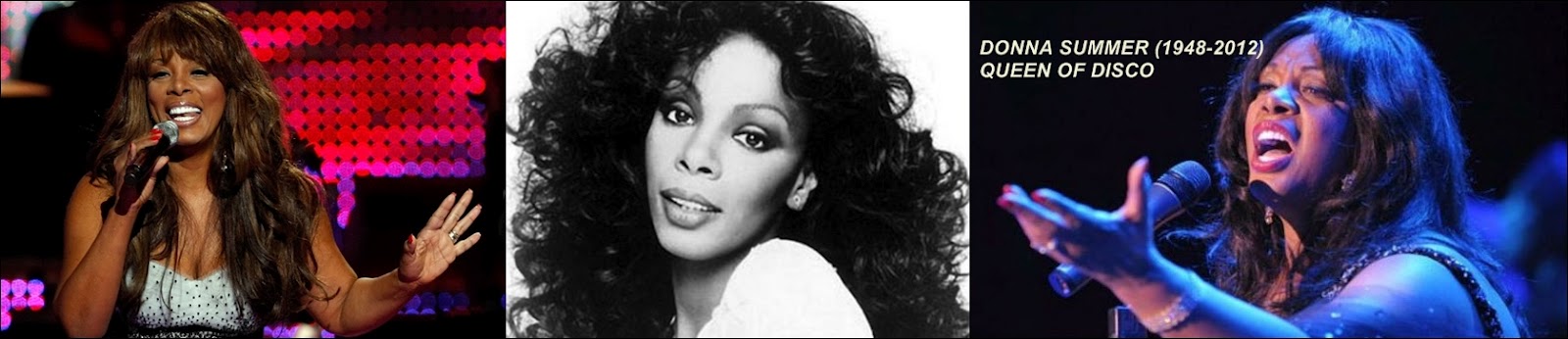
Donna Summer Remembered (1948-2012)


Boston City Councillor Charles C. Yancey today reminisced growing up with singer, actress, and five-time Grammy Award winner, Donna Summer, who succumbed to cancer today in Florida at the age of 63.
Summer, whose older sister married one of Councillor Yancey’s brothers in the 1960s, was a close friend of the Yancey family.

Summer, who was born as LaDonna Adrian Gaines to Andrew and Mary Gaines on December 31, 1948 in Boston, graduated from the Jeremiah E. Burke High School in Dorchester. She perfected her vocal talent by singing gospel music at the Grant African Methodist Episcopal Church in Boston.

Summer relocated to Europe in 1968 and took part in the German productions of several musicals, including Haare, Porgy and Bess, and Godspell. Summer, in 1975, recorded "Love To Love You Baby", which transformed her into an international star and earned her the titleQueen of Disco. She went on to score four number one singles, fourteen top ten hits, three platinum albums, five Grammy awards, and twelve other Grammy nominations.

Summer won Best R&B Vocal Performance Female for Last Dance in 1978, Best Rock Vocal Performance Female for Hot Stuffin 1979, Best Inspirational Performance for He's A Rebel in 1983, Best Inspirational Performance for Forgive Me in 1984 and Best Dance Recording for Carry On in 1997. She also picked up 3 American Music Awards in 1979, the NAACP Image Award in 1980, and a star on the Hollywood Walk of Fame in 1992.

Councillor Yancey, on July 12, 2008, presented Summer with a City Council resolution commending her successful career and her generosity to humanitarian needs. Summer contributed much of her time and money to such organizations as UNICEF, Music Cares, The Gay Men's Health Crisis, Race to Erase MS, the Juvenile Diabetes Foundation, and the National Colorectal Cancer Research Alliance.
“We’re very proud of her international presence and her philanthropy. She was down to earth in spite of her fame and wealth,” Yancey said.

Summer, who has appeared in eight movies, was the first female artist to have three number one solo singles in one year, the first female artist to use synthesizers, and the first artist to create an extended play song for use in dance clubs.
“Donna Summer will be solely missed by my family and the entire City of Boston. We are proud of the fact that she was a daughter of Boston,” Yancey said.

A Trendy Africa USA Report

Thursday, April 26, 2012

THISDAY NEWSPAPER OFFICES BOMBED IN KADUNA AND ABUJA


ABUJA, Nigeria — A suicide bomber detonated a car loaded with explosives Thursday at the office of a major Nigerian newspaper in the country's capital and another man threw a bomb near another newspaper office in Kaduna, killing at least six people in the attacks, witnesses said.
The attack in Abuja struck the offices of ThisDay, an influential daily newspaper. The bombing in Kaduna struck a building housing offices for ThisDay, The Moment and The Daily Sun newspapers, witnesses said.

No group immediately claimed responsibility for the attacks, though they mirrored others previously carried out by a radical Islamist sect responsible for hundreds of deaths in Nigeria this year alone. In Abuja, the suicide bomber rammed his car through the gates of the ThisDay office and drove into the reception area before the explosion, said Nwakpa O. Nwakpa, a spokesman for the Nigerian Red Cross. The blast killed at least three people and wounded others, Nwakpa said.

Soldiers and police officers quickly surrounded the building, which had part of its roof torn away and all its windows blown out by the force of the explosion. The attack in Kaduna also included a car loaded with explosives, though people at the newspaper office quickly surrounded the car, witnesses said. The driver then began shouting that there was a bomb inside the car, witness Jemilu Abdullahi said.

Those there allowed the man to open the trunk of the car and he pulled out an object and threw it at the crowd, which exploded, Abdullahi said. Abdullahi said at least three people died in that blast. It is unclear why bombers targeted ThisDay, a newspaper owned by the politically connected media mogul Nduka Obaigbena. In 2002, rioting over an article published by ThisDay suggesting the Prophet Muhammad would have married a Miss World pageant contestant killed dozens in Kaduna.

The attack comes as the radical Islamist sect known as Boko Haram continues its violent campaign against Nigeria's weak central government. The sect is blamed for killed more than 440 people this year alone, according to an Associated Press count.

Source: AP

Wednesday, April 4, 2012

LAND RUSSLE: Gbenga Daniel May Exhume Dad's Corpse for Re-burial


The last may not have been heard about Abrahams Tabernacle built on plots of land owned by others. Event surrounding the construction of the controversial Abrahams Tabernacle has taken a new turn as the Aina's family pledged to ensure that Abrahams Tabernacle built by the embattled former Governor of Ogun State, Otunba Gbenga Daniel, is removed from their family land. This may mean that Otunba Gbenga Daniel may have to exhume his father's remains for re-burial.

The land on which the church is on was owned by the late Dr Aina. The deceased bought the land through Surveyor Aina and obtained all the necessary documentation from the Ogun State government. But when Daniel needed some plots in Sagamu GRA, he approached the late Dr Aina through his brother Surveyor Aina. Dr Aina refused to sell. He later fell sick and died mysteriously.

Otunba Daniel renewed his interest in the Sagamu GRA plots of land. In order to discourage Daniel from trying to force a sale, the children and other family members decided to bury the deceased on the plots of land.


In January 2010, Daniel renewed his interest in the land. He needed to build a church in honor of his father. The late Dr Aina's land would serve his purpose as the land was facing the dual carriageway. The former Governor issued a C of O to his family and sent in the bulldozers. He stationed armed police officers to guard plots 1 to 10 grabbed from their owners. He forgot to revoke the late Dr Aina's title. 

The family protested and begged OGD that their late father Dr Aina was buried on one of the plots of land over-looking the main road. OGD's friend Surveyor Aina pleaded with Daniel to no avail. All the constructions on the different plots of land were leveled. Daniel built a fence to secure all the plots grabbed from their owners. 

The Abrahams Tabernacle today is built on the grave of Dr Aina. Angry family members are insisting that they won't sell the land to Daniel as their father was buried on the land. Daniel has approached his friend Surveyor Aina to plead with other family members to save him from the humiliation of having to demolish the church and also exhume's Pa Daniel's remains from the land. But defiant family members told Daniel to remove the church as he knowingly built it on their father's grave. They insisted that they will not sell the plot of land on which Pa Daniel was buried.

Without the church buying the land from the owners, it may not be possible for Abrahams Tabernacle to obtain a C of O as directed by the Ogun State White Paper on the report of the Justice Akinyemi judicial Commission on Lands and Acquisitions.Sources in Sagamu said Daniel was frustrated by the refusal of the late Dr Aina's family to sell the land. Hence he has solicited the support of Chief Adebisi Adesanya and the Akarigbo of Remoland to pressure the family to sell the plots.

Otunba Gbenga Daniel became a friend of Surveyor Aina shortly after clinching the PDP gubernatorial ticket for Ogun State. He was introduced to Surv Aina by Age Omo Lemomu widely believed to be working for Adamu Ciroma at that time. The former Chairman of Sagamu LG, Akintan, was also in attendance. Daniel wore a blue guinea brocade on the day he visited Surveyor Aina in his Sagamu GRA house. He knew the late Dr Aina through his brother. Both Age Omo Lemomu and Dr Aina died mysteriously. 

Source: Naijanews

Friday, March 30, 2012

ECOWAS gives Mali leaders ultimatum to relinquish power


West African nations have given the leaders of a coup in Mali 72 hours to relinquish power or face sanctions. ECOWAS said the proposed measures included closing all land borders and freezing Mali's assets.
The leaders met in Ivory Coast, after earlier plans for talks with the coup leaders in the Malian capital, Bamako, were abandoned as coup supporters occupied the airport's runway. Mali's neighbours have already told the junta to step aside. They have placed a peacekeeping force on standby.

The president of the commission of the Economic Community of West African States (Ecowas), Kadre Desire Ouedraogo, told reporters that if the deadline was not met, all the 15 countries of the bloc would deny Mali access to their ports, and there would be no transfers to commercial banks in Mali from the regional central bank.

The coup leaders have unveiled a new constitution as well as announcing elections in which those who took part in the coup would be barred from standing. However, no date has yet been set.
The coup was led by soldiers unhappy with the way President Amadou Toumani Toure's government had been handling a Tuareg insurgency in the north.

The Tuareg rebels have forced the army out of several northern towns in recent months. Under the new constitution, a transitional committee composed of 26 members of the security forces and 15 civilians would take power. Those who serve on the committee will be given immunity from prosecution.
Some of the document is similar to Mali's current constitution, including guarantees of freedom of speech, thought and movement.

Mr Toure - widely known as ATT - said on Wednesday that he remained in the country, free and in good health. "I think the most important thing today is that we should, through consensus, find a way out of this crisis. The most important thing is not ATT, not the man. What is important is democracy, our institutions, Mali," he told French radio network RF1.

Kenya to host sub-Saharan Africa's largest wind farm


The Lake Turkana Wind Power project aims to provide reliable, low-cost wind power to the Kenya national grid, allowing the country to reduce its dependency on hydroelectric power. Kenya's remote Turkana region was briefly a top Twitter trend on Monday after British firm Tullow Oil said it had struck oil in one of the east African country's poorest areas. The news prompted a flurry of #TurkanaOil tweets with some predicting a windfall but many others wondering whether oil would be a blessing or a curse.

Somewhat ironically, as Kenya dreams of joining Africa's oil giants, the arid region surrounding the jade waters of Lake Turkana is already poised to make a serious contribution to Kenya's ever-growing energy needs with the construction of sub-Saharan Africa's largest windfarm.
Construction on the euro 582m Lake Turkana Wind Power project (LTWP) is due to start in June, pending the finalisation of risk guarantees from financial institutions IDA and MIGA, both part of the World Bank, according to company officials.


"The World Bank Group has been working with the Kenyan government and … Kenya Power on this since August last year. They are completing their internal approval processes including the due diligence on the project. They are well advanced and we hope they will have completed and reached their board approvals in the next two months," Carlo Van Wageningen, head of LTWP, told the Guardian in an email response to questions.

The ambitious project, which is backed by the African Development Bank, marks the largest single private investment in Kenya's history, and should allow the country to diversify from hydroelectric power, which provides around 60% of its electricity needs but is prone to drought and irregular rainfall, leading to blackouts and shortages that dampen economic growth.
Only about 18% of Kenyan households have access to power, according to the United Nations, and demand is increasing. Kenya's peak electricity demand has risen to 1,200 megawatts, compared with 780MW in 2002, due to economic growth.

The government is committed to diversifying its power sources. Kenya is the first African country to tap geothermal power, harnessing power from steam released by hot rocks beneath the Rift valley. The abundant sun and wind are also being harnessed in a variety of projects: of these, the Lake Turkana project is the most audacious, both because of the scale and the location.
Nick Nuttall, spokesman for the United Nations Environment Programme (UNEP), said Kenya was among a group of developing countries where UNEP had mapped potentially windy sites and ones with good solar potential. He said LTWP had plans to expand the windfarm once the first phase is under way.


"Kenya has no oil or coal that has been exploited to date, which means the country is dependent on imports and the vagaries of an oil price that can soar to some $150 a barrel and drop to $40 a barrel – whereas the sun and wind are free once the upfront costs have been covered," he said.
"Combined with the expansion of geothermal electricity generation near Naivasha, where there is now a near-term target of about 1,300MW and the potential of solar in Kenya, which has hardly been tapped yet, Kenya could become a zero-emission economy in the field of electricity generation over the coming years, by some estimates," said Nuttall.
LTWP says it will provide 300MW of low-cost power to the national grid, equivalent to about 20% of the current installed electricity-generating capacity.

The windfarm will cover 40,000 acres in Loiyangalani district in north-eastern Kenya, stretching from 450m at the shore of Lake Turkana to 2,300m above sea level at the top of Mount Kulal. Because of the daily temperature fluctuations, there are strong, predictable winds between the lake and the desert, with LTWP estimating average speeds of 11m per second.
A total of 365 wind turbines will be erected once 204km of roads have been built or improved to allow access for trucks, which will need to make around 12,000 trips to bring materials to the area.
"The challenges will be many but greatest of all … is the ability to manage the co-ordination of interface risks between the six EPC (Engineering, Procurement and Construction) contracts this project is composed of to ensure timely completion," Van Wageningen said.

He said it was too early to comment on what the consequences of the oil discovery in Turkana would be. "We hope and expect that the two investments can coexist without interfering with each other. We are also not sure yet on how near the discovery is to the LTWP site," he said.
Production of the first 50MW is expected to start by December 2013 with the windfarm due to be fully operational by late 2014. A 428km transmission line will be built to link the farm to the national grid.
LTWP will sell the electricity produced to utility company Kenya Power and it says wind power will be the lowest-cost power-generation option available, along with geothermal power.
The LTWP consortium is made up of Dutch firm KP&P Africa B.V., Aldwych International, the Industrial Development Corporation of South Africa (IDC), the Industrialisation Fund for Developing Countries (IFU), Wind Power A/S (Vestas) and the Norwegian Investment Fund for Developing Countries (Norfund).

LTWP says that the carbon credits the project creates should earn 26bn Kenyan shillings (euros 200m) over the life of the project, and this income will be shared with the government and invested in the surrounding community.
"Under our Corporate Social Responsibility programme, we will also be constructing and delivering four 33KV transmission lines and substations to bring power to four small towns in the area," said Van Wageningen, adding that the company expected to source most labour locally.
"There is no reason to suggest the windfarm in Turkana could be anything but positive for local people, especially if it generates jobs in maintenance and diversifies livelihoods either by direct employment or via the availability of clean electricity to nearby communities," said Nuttall.
LTWP says the project will create 2,500 jobs during the 32-month construction period and 200 full-time jobs during its operations.

According to the Earth Policy Institute, wind energy developers installed a record 41,000MW of electricity-generating capacity last year, with more than 80 countries now harnessing the wind. In Africa, Ethiopia brought its first windfarm online last year, and both Nigeria and Mauritania have projects on the table. Until now, Morocco, Egypt and Tunisia have led the way, although South Africa is also believed to have substantial potential.
In Kenya, investment grew from virtually zero in 2009 to $1.3bn in 2010 across technologies such as wind, geothermal, small-scale hydro and biofuels.
By Clar Ni Chonghaile
Sunday, March 4, 2012

Second Son Arrives for Segun Arinze

Mrs. Julie Arinze, wife of the Segun Arinze, President of the Actors Guild of Nigeria, has put to bed a bouncing baby boy in a Houston Hospital. The birth was recorded on the 2nd of March 2012 at about 3.30 am. Segun Arinze now has two sons from his marriage with pretty energy sector attorney, Julie.
Segun, Julie with first Son, Ayo.

Both Mother and baby are reported in excellent health just as observatory precautions had to be prescribed as recommended by the consulting physician. The proud father is expected to join his family shortly.

A Trendy Africa USA Report.

Monday, February 20, 2012

Man attempts suicide by driving nail into skull


A 32 year old Nigerian Male (name withheld) has miraculously survived a self inflicted bodily harm by driving a 6 inch nail through his skull in an apparent suicide attempt. The young Man is reported to have suffered from depression and was escorted to the emergency room by a relative. The incidence is reported to have occurred in Imo state, Nigeria. A few days after being admitted, the nail was successfully removed by a team of Surgeons at the hospital. The incidence is however not an isolated case.
Actual x ray photo of the patient - white line represents the nail

In 2006, a 44 year old man was referred to the accident and emergency department by the psychiatric services, having claimed to have hammered several nails through his skull over a three month period. The patient had a long history of depression, personality disorder, and previous deliberate self-harm. He had remained well throughout this period and had been cleaning the wounds with weak antiseptic on a regular basis. He had concealed the injuries by wearing a hat. Two days prior to admission he had inserted a much larger 12.7 cm (5 inch) masonry nail and had developed body weakness.


A Trendy Africa Nigeria report.

Tuesday, February 7, 2012

Kase Lawal linked to illegal deal in Congolese Gold


According to a recent report by the UN's Group of Experts on the Democratic Republic of the Congo (DRC) states, Kase Lawal, a Nigerian-born US oil tycoon, transferred millions of dollars to the notorious rebel leader Bosco Ntaganda between December 2010 and February 2011. If true, this would be a contravention of UN resolutions banning individuals or organizations from financing illegal armed groups in the war torn eastern DRC. The UN report says Lawal, the chairman and chief executive of the Houston-based oil firm Camac, was aware he was paying Ntaganda.

Ntaganda has been wanted by the international criminal court (ICC) since an arrest warrant was issued in 2006. He funds his exploits by smuggling natural resources in the mineral-rich country, and faces allegations of recruiting child soldiers and presiding over mass rapes and murder of civilians by his troops in the National Congress for the Defense of the People (CNDP). The CNDP militia has since integrated into the Congolese national army but its soldiers continue to obey rebel command structures. Ntaganda, like many rebel leaders in eastern DRC, funds his activities by smuggling natural resources.
Dr. Kase Lawal

 According to the report, while Lawal was initially under the impression that he was buying gold from an owner in Kenya, he did not abort the deal when he learned Ntaganda was the true owner. Instead, the UN report says Lawal merely "appeared relieved to finally be engaging directly with the true owner of the gold".

The report says Lawal financed the deal while Edward Carlos St Mary, a Houston businessman and friend of Lawal's, carried out the transaction in DRC. The deal was proposed to the two men by Dikembe Mutombo, a Congolese former NBA player with the Houston Rockets, and three of his relatives. Despite paying, Lawal never received the gold. St Mary flew to Goma in DRC to finish the deal in a Camac-leased jet, but the passengers were arrested, including Mickey Lawal, a senior official of CAMAC by Congolese presidential security officers as they tried to take off with the gold in February 2011.

St Mary and two Camac employees were charged with money-laundering and illegal transport of a banned material, because at this time the Congolese government had banned mining of gold, tin and coltan in the provinces where the minerals trade was affected by illegal armed groups. The three men were released in late March after Camac's Kinshasa representative paid $3m (£1.9m) in fines. Substantial sums of money were involved from the start. The report says Lawal told St Mary he had lost "$30m as a result of the whole ordeal, including transport fees, fines, bribes" and the payments for the gold. Jason Stearns, a former Group of Experts co-ordinator, said: "This is a fine example of the rank disregard of international law by major international companies and businessmen.

"Lawal knew Bosco Ntaganda was involved in the deal, so he was knowingly doing business with a man wanted by the ICC. On top of that, there was a Congolese mining ban in place at the time. And finally, he's probably violating a UN arms embargo on the region. In reality, the Congolese authorities and Ntaganda worked together to ensure full payment was made for the gold, that the gold never left the DRC, and that the arrested men would have to pay a series of heavy fines to secure their release."

Dr. Kase Lawal is reported to be a great philanthropist and is also committed to public service. He is a commissioner on the port of Houston Authority and is vice chairman of the Houston Airport Development System Corporation. He is a member of the National Urban League’s Board of Directors and the Fisk University Board of Trustees. Dr. Lawal is also a member of the board of directors and a majority shareholder in Unity National Bank, the only federally-insured and licensed African American-owned bank in Texas. President Barack Obama put Lawal on the US advisory committee for trade and policy negotiations in September 2010, just months before the deal with Ntaganda. 

Source: theguardian, Houston Chronicle

Monday, February 6, 2012

Africa: International Day of Zero Tolerance to Female Genital Mutilation/Cutting


Today, 6th February 2012 marks the ninth annual International Day of Zero Tolerance to Female Genital Mutilation/Cutting (FGM/C). It is estimated that 100 to 140 million women around the world have undergone this brutal procedure and three million girls are at risk every year. We must continue to act to end this affront to women’s equality and the rights and dignity of women and girls.

No religion mandates this procedure, though it occurs across cultures, religions, and continents. It is performed on girls in Africa, Asia, and the Middle East. Even in the United States we are fighting this practice. FGM/C became a federal crime in the United States in 1997, but the procedure persists in some communities. The U.S. Government is working with practitioners in the health and legal community to educate groups about the negative consequences of FGM/C.


Over the years, community advocates have found that when men come to understand the physical and psychological trauma FGM/C causes, they often become effective activists for eradication, including fathers who refuse to allow their daughters to be subject to the procedure. Communities must act collectively to abandon the practice, so that girls and their families who opt out do not become social outcasts. This approach has led around 6,000 communities across Africa to abandon the practice, usually through a public declaration. Communities working together can ensure stronger, healthier futures for girls and young women.

Every government has an obligation to protect its citizens from such abuse. Secretary of State Hillary Clinton stated; "As we commemorate International Day of Zero Tolerance and remember those who have been harmed, we reaffirm our commitment to overturning deeply entrenched social norms and abolishing this practice. All women and girls, no matter where they are born or what culture they are raised in, deserve the opportunity to realize their potential".

Source: U.S State Department

Friday, January 20, 2012

SUBSIDY: EFCC probes beneficiaries


Nigeria - The EFCC has already been mandated to investigate all the subsidy beneficiaries, which include Oando, Integrated Oil and Gas, MRS, AA Rano. A-Z Petroleum, ASB, Arcon Oil, African Petroleum, Aminu resources, Con Oil, Avante Guard, Avido, Boffas and Brila Energy.

Other are D Jones Petroleum, Downstream Energy, Dosil Oil Inco Ray, Eternal, Folawiyo Energy, Frado International, First Deepwater, Heden Oil, Honeywell Petrol, AMP, Channel Oil, Fort Oil, Bovas, Obat Oil, Ipman Investment, Atio Oil, AMP, and Ernac Oil.

President Goodluck Jonathan who is insisting that there must be no sacred cows is spearheading the Hunt for all those who have defrauded Nigeria through subsidy. Sources hinted that some members of Jonathan's kitchen cautioned that going after the subsidy cabal could hurt his Petroleum Minister, but the President maintained that whoever was involved should be taken down.


Meanwhile, the Federal Government through the Assets Management Corporation of Nigeria (AMCON) has given Capital Oil owned by Ifeanyi Uba 60 days to pay back N5 Billion being rogue proceeds he made from Kerosene subsidy or risk arrest and prosecution. Capital made N22.4 Billion from petrol subsidy. NNPC allocated to Uba’s Capital Oil 75% of kerosene supplies to distribute to the entire country at N50 pump price. But the cheapest of the product at the depot is N120 per litre & N135 at the filling stations while Capital Oil makes more than N70 on each litre of kerosene sold. 

A Trendy Africa Media Report.

Monday, January 9, 2012

Labor Strike Commences just as GEJ inaugurates 1,100 mass transit buses


President Goodluck Jonathan has inaugurated 1,100 of 1,600 mass transit buses at the Eagles Square, Abuja, as part of the palliative measures he promised Nigerians to cushion the effect of the removal of fuel subsidy. He also said the scheme was not put in place because of the removal of subsidy as “deregulation or no deregulation, we need a mass transit scheme” in order to bring down cost of transportation, pointing out that the increase in the cost of transportation due to the subsidy removal was an over-reaction to the policy and regretted commuters were being made to bear the brunt.

The president noted that wagons and small buses were not suitable for mass transit and therefore makes the cost high, hence the desire to introduce the mass transit buses which he said were not being bought or run by the government.  Jonathan, who appealed to Nigerians to be patient as the pains engendered by the deregulation of the downstream sector would be temporary, said that the policy would usher in an enduring gain that would transform the economy.

Meanwhile, members of the civil societies and Nigerian Labour Congress (NLC) began mass protests against the removal of fuel subsidy. Protests which grounded the whole of Lagos also affected most state capitals throughout the country, including Abuja, where security agencies battled to control the situation. The Police was reported maintaining presence at every major civic centre where protests were targeted by members of Labour and civil societies.

a trendy africa media report

Sunday, January 8, 2012

Bolts and Nuts stolen from Niger Bridge

My approach to the historical River Niger Bridge, the main link between the West and the East of Nigeria was a great relief after spending close to ten hours on a journey that would usually be done in three. The Niger bridge links the Oil rich Delta State with the vibrantly commercial city of Onitsha in Anambra State. Even though I still had to spend another three hours (normally a 10 mins journey) to cross into Onistsha and link the Owerri road, one really wondered why after all these years a second or twin bridge had not been built. I recently stumbled on the following interview with the current Minister of Works in Nigeria;

What are the challenges confronting the building of the Second River Niger Bridge?

Work is in progress and we are confronting the challenges of the River Niger Bridge that I mentioned earlier. Sometime ago, we heard rumors that the bridge was giving way and we sent a team of consultants there to do some investigation on the bridge. Surprisingly, one of the major challenges we had with our roads and bridges is the issue of abuse.

The Niger Bridge has been heavily abused by Nigerians with over 1,100 bolts and nuts removed by Nigerians. And that is why at a time, if you were driving on the Niger Bridge, you could feel the vibration. When this was discovered, the ministry moved in quickly and contracted Setraco to do some maintenance work on the bridge. As I speak, over 1,100 bolts and nuts have been replaced on that bridge, but it is saddening when you reflect on the fact that those bolts and nuts were removed by Nigerians, who are more interested in their pecuniary gains without even thinking about the general well being of the people that make use of the bridge.


This abuse of our bridges is not limited to the Niger Bridge. If you look at the picture of the Third Mainland Bridge today, many of the metallic hand rails have gone. They were not removed by spirits, they were removed by Nigerians; if you go to the Benin/Ore Road now, there is a spot where accidents regularly occur, where vehicles always fall into the river, each time you are travelling past Ore.
It is normal to hear that a bus has plunged into the river and 16 people died. Given this scenario, we have also responded to this challenge by insisting that in all our bridges, balustrades should be made with concrete, and we are now putting in place concrete balustrades. If you go to the Gwagwalada New Bridge that we just constructed, the balustrades are no longer made of iron, but concrete, although they hardly add the same aesthetic value as the other previous metal ones, but prevailing circumstances have forced us to use this to meet those challenges. This is proof of the fact that Nigerians lack aesthetic values.

Yes, we have a master plan for the Second Niger Bridge, as we speak, in the next couple of weeks we shall be running an advertorial on the Second Niger Bridge. Work on the bridge is obviously in progress; we have initiated discussions with the International Finance Corporation of the World Bank, as we are talking. We are just at the preparatory stage; when we come to the construction stage, then it becomes an issue that should be considered beyond the ministry. I can assure you, the Second Niger Bridge will take off next year.

“Excerpts from an interview with Honorable Minister Mike Onolememen”

source: thisdaylive


Saturday, January 7, 2012

Nigerians Set to Demonstrate in Washington DC


Demonstrations protesting the removal of the gas subsidy in Nigeria will take place at the World Bank on Monday, January 9th at 11am to 1pm and at the International Monetary Fund (IMF) on Friday, January 13th at 10am to 2pm in Washington DC.
"Since being elected into office, the current Nigerian Government has been extremely harsh and insensitive towards the basic needs of its citizens. The Government has turned a deaf ear to the cries of Nigerian citizens. The majority of the Nigerian people cannot afford the removal of this gas subsidy and the domino effect this will cause (the price increase on other goods and services)," Harrison Nwozo, protest organizer said.

This is a part of the Occupy Nigeria movement (Occupy Nigeria DC) which is a series of protests that started in Nigeria on Monday, January 2nd in response to the gas subsidy removal by Nigerian President, Goodluck Jonathan on Sunday, January 1st.
On Monday, January 9th, an indefinite nationwide strike will commence in Nigeria until the gas subsidy is reinstated. Protesters in Washington, D.C. are urging the IMF to encourage the reinstatement of the subsidy. Recently, the World Bank and IMF advised African countries to remove all subsidies to reduce their national debts.
 photo: Trendy Africa

“We are conducting this protest in Washington, D.C. because we want to show our solidarity to our Nigerian brothers and sisters back home. The removal of the gas subsidy has not only affected gas prices in Nigeria but has caused a chain reaction on the rest of its economy. Nigeria is a nation where 50% of the people live on less than $2 a day so for the government to not think about our unique challenges before this policy was changed is thoughtless and inconsiderate,” Chika Uwazie, protest organizer said.
Protests have also been reported in other countries including London.  In addition to the reversal of the gas subsidy ban, Nigerians want better infrastructure and the elimination of corruption.

The protest on Monday will begin at 11am with a march at McPherson Square to World Bank Headquarters located at 1818 H Street, NW, Washington, D.C.   The demonstration will end at 1pm. The protest on Friday will begin at 10am at the International Monetary Fund located at 700 19th street NW with a march to the second International Monetary Fund building at  1900 Pennsylvania Ave NW.

"As far as Nigeria goes, I have never been able to cast a vote. So, what this protest means to me is something very personal. It means an opportunity to be part of something bigger than me; an opportunity to stand with other Nigerians and stand against EVERYTHING wrong with Nigeria. This, for me, is not a choice, it is an obligation," Ifeanyi Nwoko, protest organizer said.
Local protests are being organized by various groups and organizations including Let There Be Light In Nigeria - Nigerian Million March and African Diaspora Institute.  

For more information about the protests please contact: Tribex2000@yahoo.com

Christians Flee Northern Nigeria


Hundreds of Christians have begun to flee northern Nigeria after dozens were killed in a series of attacks by Islamist militants who issued an ultimatum to Christians to leave the mainly Muslim region or be killed, witnesses said Saturday. A Nigerian newspaper Tuesday published a warning from Boko Haram, a movement styled on the Taliban, that Christians had three days to get out of northern Nigeria.

Since the expiry of that ultimatum, attacks in towns in four states in northeastern Nigeria have left at least 37 people dead and hundreds of Christians are fleeing to the south, according to residents and aRed Cross official. Gunmen armed with Kalashnikovs have targeted church congregations and a group of mourners in a church hall.

Witnesses said some shops run by Christians from the Igbo ethnic group in towns hit by the violence, including Yola and Mubi, were closed Saturday and residents started to pack their belongings onto buses heading to southern regions.
There are fears of reprisal attacks on Muslims. Christian groups have asked their followers to remain peaceful but they concede that there is a risk of further violence.
"We are very worried by the persistent killings. We have asked youths to remain calm. We stand for a united Nigeria but there is a limit to human tolerance," a spokesman for the Christian Association of Nigeria told Reuters.

President Goodluck Jonathan declared a state of emergency in the northeast and two other regions in Nigeria on December 31, in a bid to contain a growing insurgency by Boko Haram, which says it wants to apply Islamic sharia law across the country.
Heavily armed troops and tanks have been patrolling parts of northeast Nigeria since Jonathan made the announcement but it is a vast, remote region that has proven difficult to secure.
President Goodluck Jonathan of Nigeria

WAVE OF ASSAULTS
Gunmen opened fire in a hall in Mubi in Adamawa state on Friday where a group of Christians had gathered to mourn the deaths of those killed in an attack the previous day. The death toll in those attacks has reached 21, the Red Cross said on Saturday.
"Unknown gunmen in Mubi attacked and killed 3 people on Thursday night and Friday as people gathered to mourn the deaths, the gunmen believed to be the same attackers killed 18 people, totaling 21," said Red Cross spokesman Umar Mairiga.
Adamawa state is just south of Borno state, the homeland of Boko Haram, which has been behind almost daily attacks in recent months.
Local residents in the Adamawa state capital Yola said gunmen had fired on Christians leaving church Friday, killing eight people. The police confirmed the incident but were not able to give further comment or a death toll.
A spokesman for Boko Haram told reporters by phone that the sect was behind many of the attacks, including a shooting at a church service in northeast Gombe Thursday, which killed at least six people.
"The Gombe attack on the Deeper Life Church and the attack on Igbos in Mubi and that of Yola were all carried out by us," Abu Qaqa said by telephone to reporters.
Elsewhere, a Christian couple were shot dead Friday in the Mairi ward of Maiduguri, the capital ofBorno state and the nucleus of Boko Haram's violence since an uprising in 2009.
"A Christian husband and wife have been killed in the night (Friday) in Maiduguri," said Colonel Victor Ebhemele, operations officer in the Borno joint task force.
In Yobe state, which sits on borders with Borno state and neighboring Niger, police said it killed some members of Boko Haram in a gun battle Friday night.
The Red Cross official said members of the Igbo ethnic group, who are usually Christian and a minority in the mainly Muslim north were fleeing the northeast. Most of the people killed in Mubi were Igbo, local residents said.
Boko Haram, whose name means "Western education is forbidden," claimed responsibility for a series of bomb attacks across Nigeria on Christmas Day, including one at a church near the capital Abuja that killed at least 37 people and wounded 57.

Nigeria's population of around 160 million is split roughly equally between Christians and Muslims. Most Christians live in the south and most Muslims in the north, but many communities are mixed, and the majority live side by side in peace.
The persistent violence adds to growing problems for Jonathan, who has been criticised for not getting a grip on Boko Haram's insurgency. Nationwide strikes are planned Monday against the government's decision to end fuel subsidies from January 1, which caused the pump price to double.

Report: REUTERS


UPDATES 

At least 20 more people were killed at the weekend in fresh attacks suspected to have been carried out by the terrorist Boko Haram sect in Adamawa, Yobe and Borno States. The terrorists attacked the Christ Apostolic Church, Nasarawo Parish, Jimeta-Yola in Adamwa State, on Friday evening, killing over 12 persons. They also shot and killed four persons in another raid in Lamurde, about 80 kilometres away from Yola, the Adamawa State capital. In another attack in Potiskum, the Yobe State capital, Boko Haram members killed two persons and raided four banks.
On Saturday, sect gunmen also shot and killed two Christian students who attend the University of Maiduguri in Borno State, the state Police Commissioner Simeon Midenda said.
The fresh attacks in Adamawa State bring to 30 the total number of persons killed in the state in the last two days. Fourteen persons lost their lives in a similar attack on Thursday in Mubi town which borders Maiduguri, the Borno State capital, and the hotbed of Boko Haram’s terrorism.
Over 30 other persons were also admitted in various hospitals in Adamawa State where they are being treated for gunshot wounds.
The spate of attacks in the last two days compelled the Adamawa State governor, Alhaji Murtala Nyako, to impose a dusk-to-dawn curfew on Yola and Mubi to check possible reprisal attacks.
He has also placed a N25 million bounty on the heads of the killers in a bid to encourage members of the public to squeal on them to facilitate their arrest by law enforcement agents.
The attacks, especially on churches and Christians, have prompted the Christian Association of Nigeria to warn that Christians would be forced to defend themselves against being made sitting ducks if the government cannot guarantee their safety. (8th Jan, 2012)

Tuesday, January 3, 2012

SAG parleys with AGN in Los Angeles


The Screen Actors Guild-SAG in the USA recently hosted the Actors Guild of Nigeria-AGN in California. The trip by AGN which ran between the 10th - 21st Oct 2011was to facilitate future cooperation’s with SAG in an effort to globalize Actors guild of Nigeria and bring it to the fore.
Prof. Ken Howard and Segun Arinze
The delegation was received in Los Angeles by the President of Screen Actors Guild, SAG, Prof. Ken Howard and members of the Executive Council and members of the Board. In his welcome address, Prof. Howard tagged the visit as Nollywood Meets Hollywood and revealed that it was the first time ever that SAG would be meeting any Guild/Association involved in film production from Africa.
SAG's Pamela, Kathy, Segun, Duncan
The meetings also aimed at building an inter guild partnership where trainings, workshops, seminars and more will be held to further improve on the standards of movie productions in Nigeria. AGN was recommended by federation of international Actors-FIA to SAG.
Uchenna Nnenna, Kingsley Ogbonna, Obi Osotule, Kanayo O. Kanayo, Ken Howard, Segun Arinze, Emeka Rollas, Bob Manuel Ndokwu, Ejiro Okurame
We are affiliates of the FIA. AGN members took time out to visit Universal studios on a facility tour. The team was led by AGN National President Segun Arinze with other members of the entourage including the National Secretary, Ejezie Emeka Rollas, Kanayo O. Kanayo, Bob Manuel-Udokwu, Kingsley Ogbonna, Ejiro Okurame, Uchenna Nnanna, Obi Osotule and renowned film maker, Kingsley Ogoro. 
L. Scott Caldwell, Emeka Rollas, Ned Vaughn
AGN's trip to LA USA was sponsored by the Ifeanyi Ubah Foundation and Capital Oil with additional support by Sifax group.
Photos courtesy of Getty Images 

Saturday, November 26, 2011

Ikemba Nnewi, Chukwuemeka Odumegwu-Ojukwu Passes (1933-2011)


Chukwuemeka Odumegwu Ojukwu, Ikemba Nnewi has died in a London hospital after a protracted illness following a stroke. He was 78. The ailing leader of the defunct Biafran Republic and  leader of the All Progressive Grand Alliance (APGA) Dim Chukwuemeka Odumegwu Ojukwu was born on 4 November 1933 and died on the 25th of November, 2011.

At 13, his father sent him overseas to study in Britain, first at Epsom College, in Surrey and later earned a Masters degree in history at Lincoln College, Oxford University and returned to colonial Nigeria in 1956. In 1957 the Ikemba Nnewi joined the Nigerian Army as one of the first and few university graduates.  Ojukwu was among the 15 Nigerians officers out of the 250 officers the Nigerian Military Forces had then. After serving in the UN peacekeeping force in the then Congo under Maj.-Gen. Johnson Thomas Aguiyi-Ironsi, Ojuwkwu was promoted to Lieutenant-Colonel in 1964 and was posted to Kano, where he was in charge of the 5 Battalion of the Nigerian Army.

On July 6, 1967, the then military Head of State, Col. Yakubu Gowon declared war and attacked Biafra in a bid to stop Ojukwu’s secessionist attempt. The war lasted 30 months and ended on Jan. 15, 1970. As the war was wearing out, Ojukwu went on exile and stayed away for 13 years. He was granted state pardon by President Shehu Shagari, a decision which was trailed by the deceased’s triumphant return in 1982.

Ojukwu's rise coincided with the fall of Nigeria's First Republic, formed after Nigeria, a nation split between a predominantly Muslim north and a largely Christian south, gained its independence from Britain in 1960. A 1966 coup led primarily by army officers from the Igbo ethnic group from Nigeria's southeast shot and killed Prime Minister Abubakar Tafawa Balewa, a northerner, as well as the premier of northern Nigeria, Ahmadu Bello.

The coup failed, but the country still fell under military control. Northerners, angry about the death of its leaders, attacked Igbos living there. As many as 10,000 people died in resulting riots. Many Igbos fled back to Nigeria's southeast, their traditional home.

Ojukwu, then 33, served as the military governor for the southeast. The son of a knighted millionaire, Ojukwu studied history at Oxford and attended a military officer school in Britain. In 1967, he declared the region — including part of the oil-rich Niger Delta — as the Republic of Biafra. The new republic used the name of the Atlantic Ocean bay to its south, its flag a rising sun set against a black, green and red background.


But instead of sparking pan-African pride, the announcement sparked 31 months of fierce fighting between the breakaway republic and Nigeria. Under Gen. Yakubu "Jack" Gowon, Nigeria adopted the slogan "to keep Nigeria one is a task that must be done" and moved to reclaim a region vital to the country's coffers. Despite several pushes by Biafran troops, Nigerian forces slowly strangled Biafra into submission. Caught in the middle were Igbo refugees increasingly pushed back as the front lines fell. The enduring images, seen on television and in photographs, show starving Biafran children with distended stomachs and stick-like arms.
Despite the efforts of humanitarian groups, many died as hunger became a weapon wielded by both sides.
"Was starvation a legitimate weapon of war?" wrote English journalist John de St. Jorre. "The hard-liners in Nigeria and Biafra thought that it was, the former regarding it as a valid means of reducing the enemy's capacity to resist, as method as old as war itself, and the latter seeing it as a way of internationalizing the conflict." The images fed into Ojukwu's warnings that to see Biafra fall would see the end of the Igbo people.

"The crime of genocide has not only been threatened but fulfilled. The only reason any of us are alive today is because we have our rifles," Ojukwu told journalists in 1968. "Otherwise the massacre would be complete. It would be suicidal for us to lay down our arms at this stage."
That final massacre never came. Ojukwu and trusted aides escaped Biafra by airplane on Jan. 11, 1970. Biafra collapsed shortly after. Gowon himself broke the cycle of revenge in a speech in which said there was "no victor, no vanquished." He also pardoned those who had participated in the rebellion.

He later wrote his memoirs and lived the quiet life of an elder statesman until he unsuccessfully challenged incumbent Olusegun Obasanjo for the presidency in 2003. Obasanjo served as a colonel in the Biafran war and gave the final statement on rebel-controlled radio announcing the conflict's end. He leaves behind his Wife, Bianca Ojukwu (Onoh) and children.


Tribute by Mrs. Bianca Ojukwu, Widow Of Late Dim Chukwuemka Odumegwu-Ojukwu

How do I sum up 23 years in one page? I don't know. How do I describe you? I cannot. Not in any depth. Not for anybody else - you were my husband, my brother, my friend, my child. I was your queen, and it was an honour to have served you.

You were the lion of my history books, the leader of my nation when we faced extinction, the larger-than-life history come to my life - living, breathing legend. But unlike the history books, you defied all preconceptions. You made me cry from laughter with your jokes, many irreverent. You awed me with your wisdom. You melted my heart with your kindness. Your impeccable manners made Prince Charming a living reality. Your fearlessness made you the man I dreamt of all my life and your total lack of seeking public approval before speaking your mind separated you from mere mortals.

Every year that I spent with you was an adventure - no two days were the same. With you, I was finally able to soar on wings wider than the ocean. With you I was blessed with the best children God in heaven had to give. With you, I learnt to face the world without fear and learnt daily the things that matter most. Your disdain for money was novel - sometimes funny, other times quite alarming.

It mattered not a whit to you. Your total dedication to your people - Ndi-Igbo - was so absolute that really, very little else mattered. You never craved anybody's praise as long as you believed that you were doing right and even in the face of utmost danger, you never relented from speaking truth to power - to you, what after all, was power? It was not that conferred by the gun, nor that stolen from the ballot box. No. You understood that power transcended all that. Power is the freedom to be true to yourself and to God, no matter the cost.

It is freedom from fear. It is freedom from bondage. It is freedom to seek the wellbeing of your people just because you love them. It is the ability to move a whole nation without a penny as inducement nor a gun to force them. When an entire nation can rise up for one person for no other reason than that they love him and know he is their leader - sans gun, money, official title or any strange paraphernalia - that is power.

To try to contain you in words is futile. You span the breadth of human experience - full of laughter, joy, kindness and sometimes, almost childlike in your ability to find something good in almost everyone and every situation. You could flare up at any injustice and in the next instant, sing military songs to the children. You could analyse a situation with incredible swiftness and accuracy. In any generation, there can only be one like you. You were that one star. You were a child of destiny, born for no other time than the one you found yourself in.

Destined to lead your people at the time total extinction was staring us in the face. There was no one else. You gained nothing from it. You used all the resources you had just to wage a war of survival. You fought to keep us alive when we were being slaughtered like rams for no reason. Today, we find ourselves in the same situation but you are not here. You fought that we might live. The truth is finally coming out and even those who fought you now acknowledge that you had no choice. For your faithfulness, God kept you and brought you home to your people.

You loved Nigeria. You spent so much of your waking moments devising ways through which Nigeria could progress to Tai-Two!!! You were the eternal optimist, always hoping that one day, God will touch His people and give us one Vision and the diligence to work towards the dream. It never came to pass in your lifetime. Instead, the disaster you predicted if we continued on the same path has come home to roost. You always saw so clearly. Your words are indelibly preserved for this generation to read and learn and perhaps heed and turn. You always said the dry bones will rise again. But you always hoped we would not become the dry bones by our actions. Above all, you feared for your own people, crying out against the relentless oppression that has not ceased since the end of the war and saddened by the acceptance of this position by your own people. In death, you have awakened the spirit that we thought had died. Your people are finally waking up.

At home, you were the father any child would dream of having. At no point did our children have to wonder where you were. You were ever at their disposal, playing with them, teaching them of a bygone era, teaching them of the world they live in and giving them the total security of knowing you were always present.

In mercy, God gave me a year to prepare for the inevitable. I could never have survived an instant departure. In mercy, God ensured that your final week on earth was spent only with me and that on your last day, you were back to your old self. I cannot but thank God for the joy of that final day - the jokes, the laughter, the songs. It was a lifetime packed into a few hours, filled with hope that many tomorrows would follow and that we would be home for Christmas. You deceived me. You were so emphatic that we would be going home. I did not know you meant a different home.

The swiftness of your departure remains shocking to me. You left on the day I least expected. But I cannot fight God. He owns your life and mine. I know that God called you home because every other time it seemed you were at death's door, you fought like the lion that God made you and always prevailed. In my eyes, even death was no match for you. But who can say 'no' to the Almighty God? You walked away with Him, going away with such peace that I can only bow to God's sovereignty. Your people have remembered. The warrior of our land has gone. The flags are lowered in your honour. Our hearts are laden with grief.

But I will trust that the living God who gave you to me will look after me and our children. Through my sadness, the memories will always shine bright and beautiful.

Adieu, my love,
My husband,
My lion,
Ikemba,
Amuma na Egbe Igwe,
Odenigbo Ngwo.
Eze-Igbo Gburugburu,
Ibu dike.
Chukwu gozie gi,
Chukwu debe gi.
Anyi ga afu na omesia.


Monday, November 21, 2011

Alex Ibru dies at 66


Lagos - The Chairman and Publisher of The Guardian, Chief Alex Ibru, is dead. The deceased died on the day his wife, Maiden, was marking her birthday. According to a statement by the newspaper, Ibru gave up the ghost at about 2.30pm yesterday. Aged 66, the deceased had been sick for a while.
Born on March 1, 1945, Ibru, the youngest of the famous Ibru brothers who hailed from Agbhara-Otor, in today’s Delta State was noted for entrepreneurship.

He attended the Yaba Methodist Primary School (1951-1957), Ibadan Grammar  School (1958-1960), Igbobi College, Lagos (1960-1963) and the University of Trent (formerly Trent Polytechnic) (1967-1970) where he studied Business Economics. After working briefly in the family business under the tutelage of his older brother and patriarch, Michael Ibru, Alex Ibru launched solely and soon became one of the most successful young businessmen in the country.

He founded The Guardian in 1983 with a mission to make it one of the five best English language newspapers in the world. Ibru was the chairman of Trinity Foundation, the vehicle through which he did his massive philanthropy, giving support to the poor and the needy. He was also the founder of the Ibru Centre which promotes ecumenism and religious harmony.

The deceased was a Paul Harris Fellow of the Rotary Club International. He was minister of Internal Affairs of the Federal Republic of Nigeria and member of the highest Provisional Ruling Council (PRC), between 1993 and 1995. As minister, he introduced far-reaching reforms in the management of Nigeria’s prisons and the Nigerian Immigration Service (NIS).

He left the late Gen. Sani Abacha-led government on principle, after which an attempt was made on his life, allegedly on the orders of the ruling junta. The case on that attempted murder had been moved to Supreme Court.
 Source: Leadership.ng